Marketplace
Browse courses and digital products from top creators
59 results found
Courses
 Intermediate
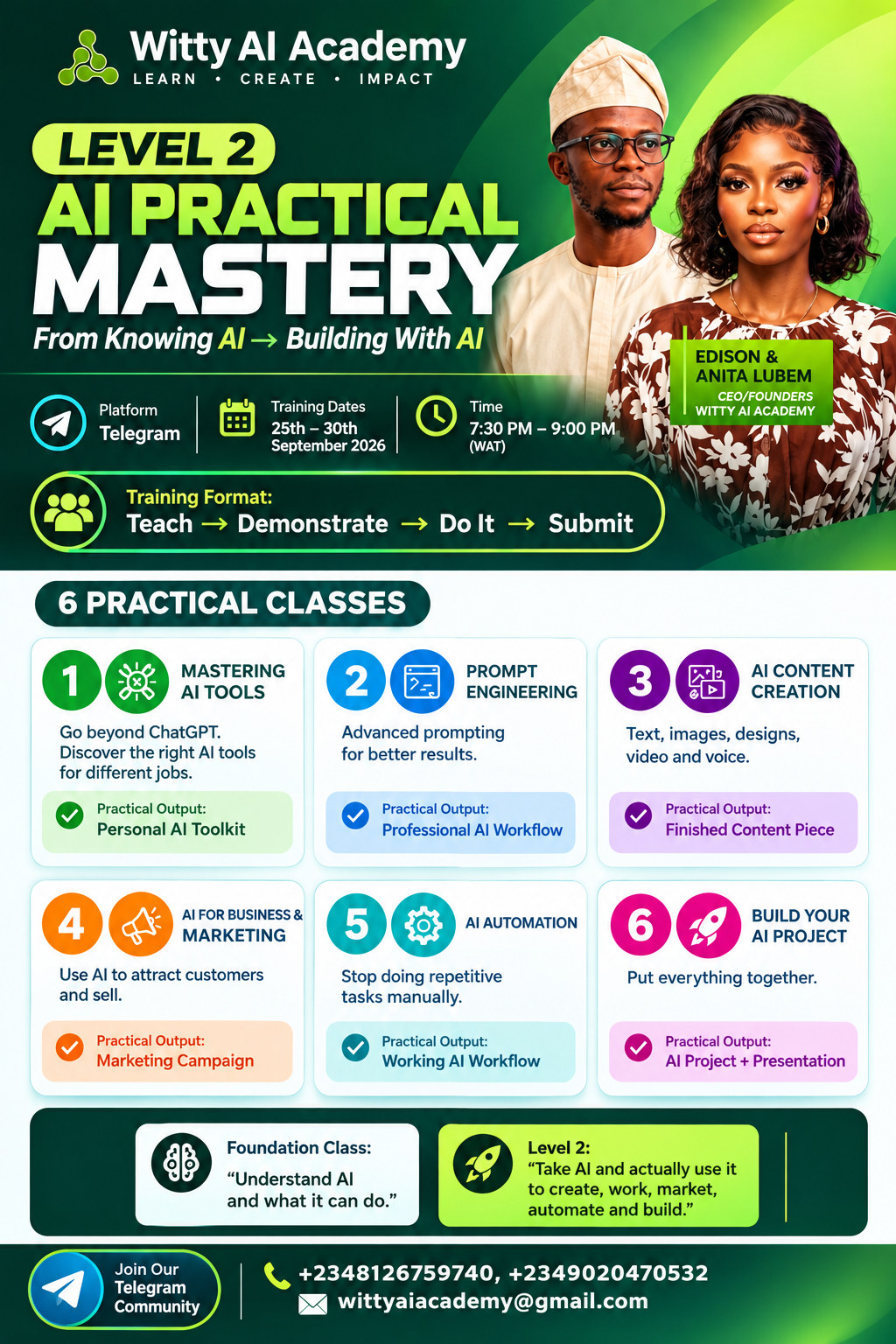
AI PRACTICAL MASTERY | Level 2
Master AI through hands-on practice—create, build, solve real problems, and turn your AI skills into valuable opportunities and income.
 Anita Patrick Otaba
 Beginner
SEO Course for Beginners Complete Introduction to Search Engine Optimization Free Class
SEO Course for Beginners Complete Introduction to Search Engine Optimization Free Class Welcome to the Complete Search Engine Optimization (SEO) Cou
 Michael Ezeadichie
 Beginner
INYOGA CLASS
 stacie bennett
 Beginner
Microsoft Excel for Financial Reporting.
By the end of this course, participants will be able to confidently use Microsoft Excel to automate financial calculations, build professional reports
 Ngk Associates
 Beginner
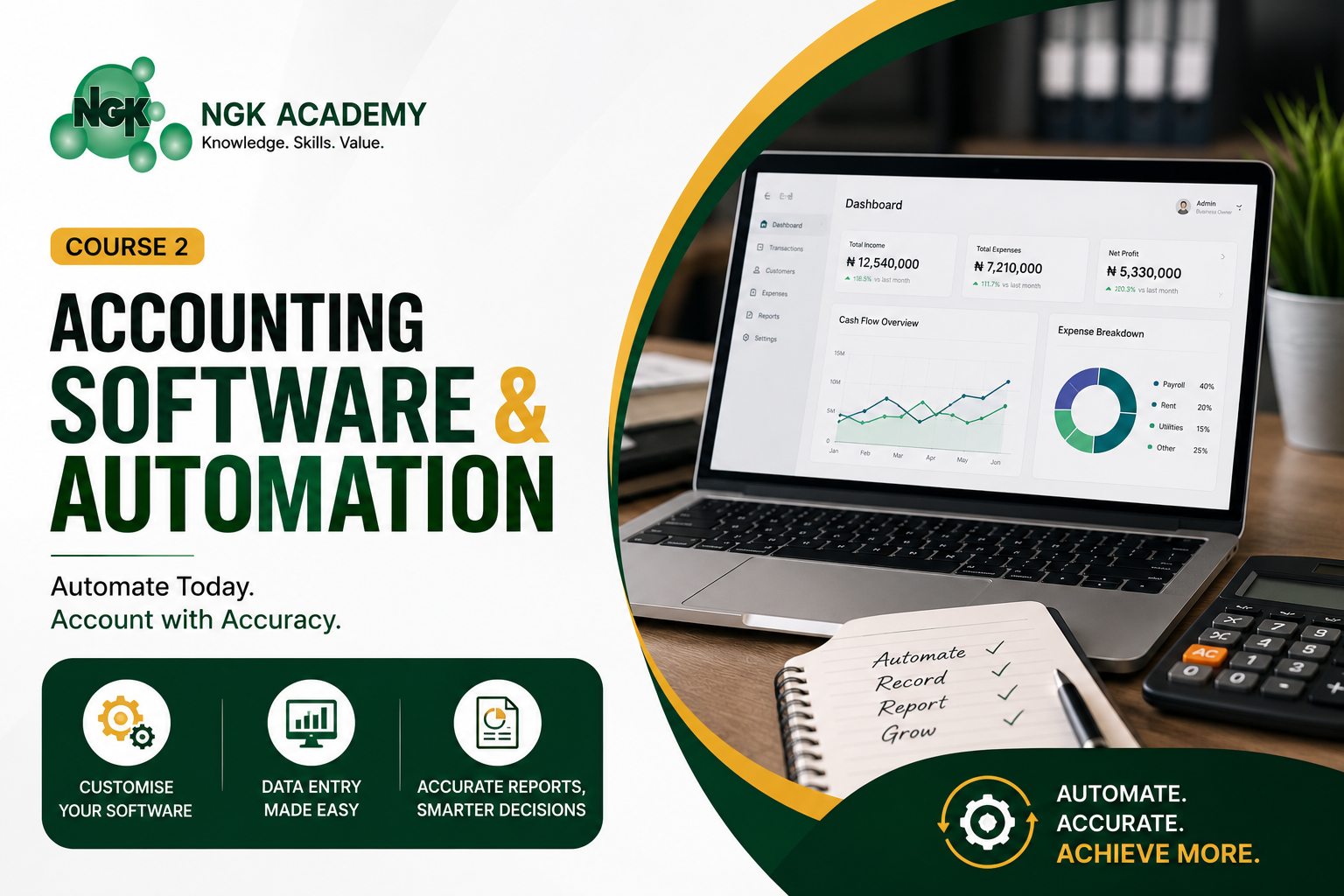
Accounting Software & Automation
The Accounting Software & Automation course equips participants with practical skills to effectively use modern accounting software for day-to-day fin
Ngk Associates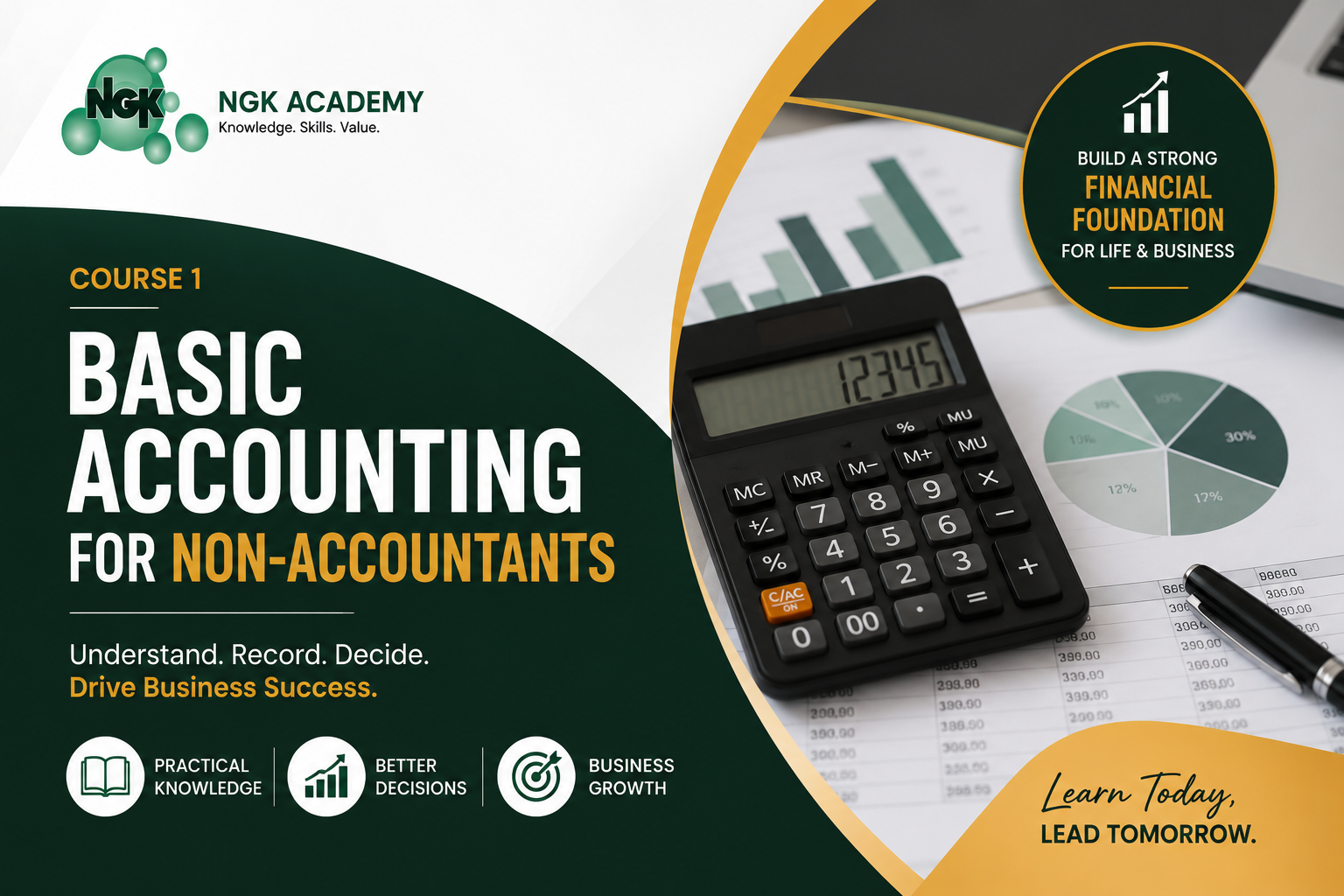 Beginner
Basic Accounting for Non-Accountants
Perfect for business owners, managers, entrepreneurs, and professionals who need a solid understanding of accounting principles without being accounta
Ngk Associates Beginner
Is IV Vitamin Therapy Worth It? Everything You Need to Know About IV Infusion
Have you ever wondered what actually happens when vitamins and minerals are delivered straight into your bloodstream?
 87Degress Aesthetics
 Beginner
How ALA IV Infusion Supports Healthy Blood Circulation 87 Degree Medical Aesthetics Clinic
Poor circulation affects millions of people — causing fatigue, numbness, swelling, and even long-term organ damage. But what if there was a powerful,
87Degress Aesthetics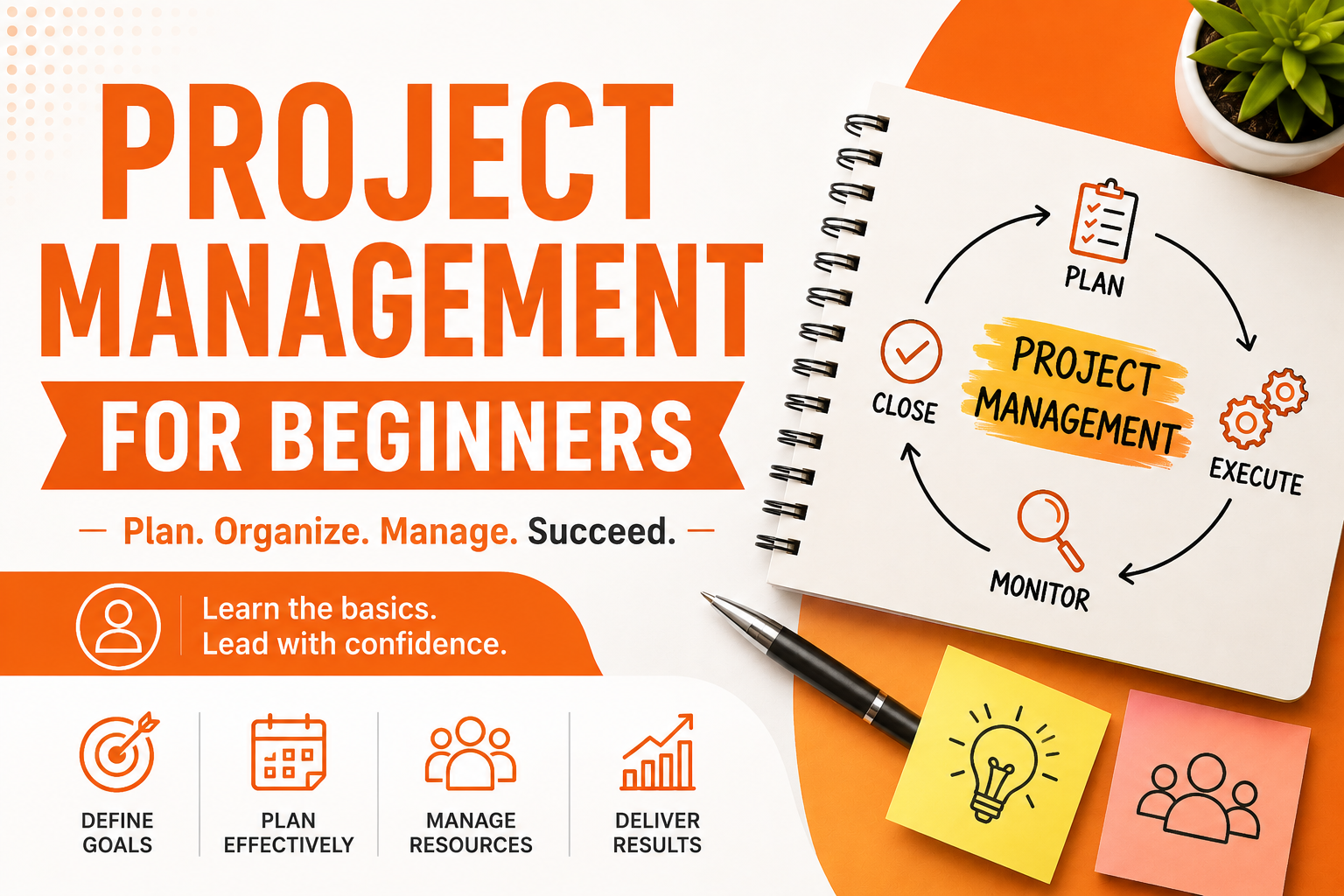 Beginner
Project Management
Project Management for Beginners equips learners with the essential skills to organize, execute, & successfully deliver projects from start to finish.
 Beginner
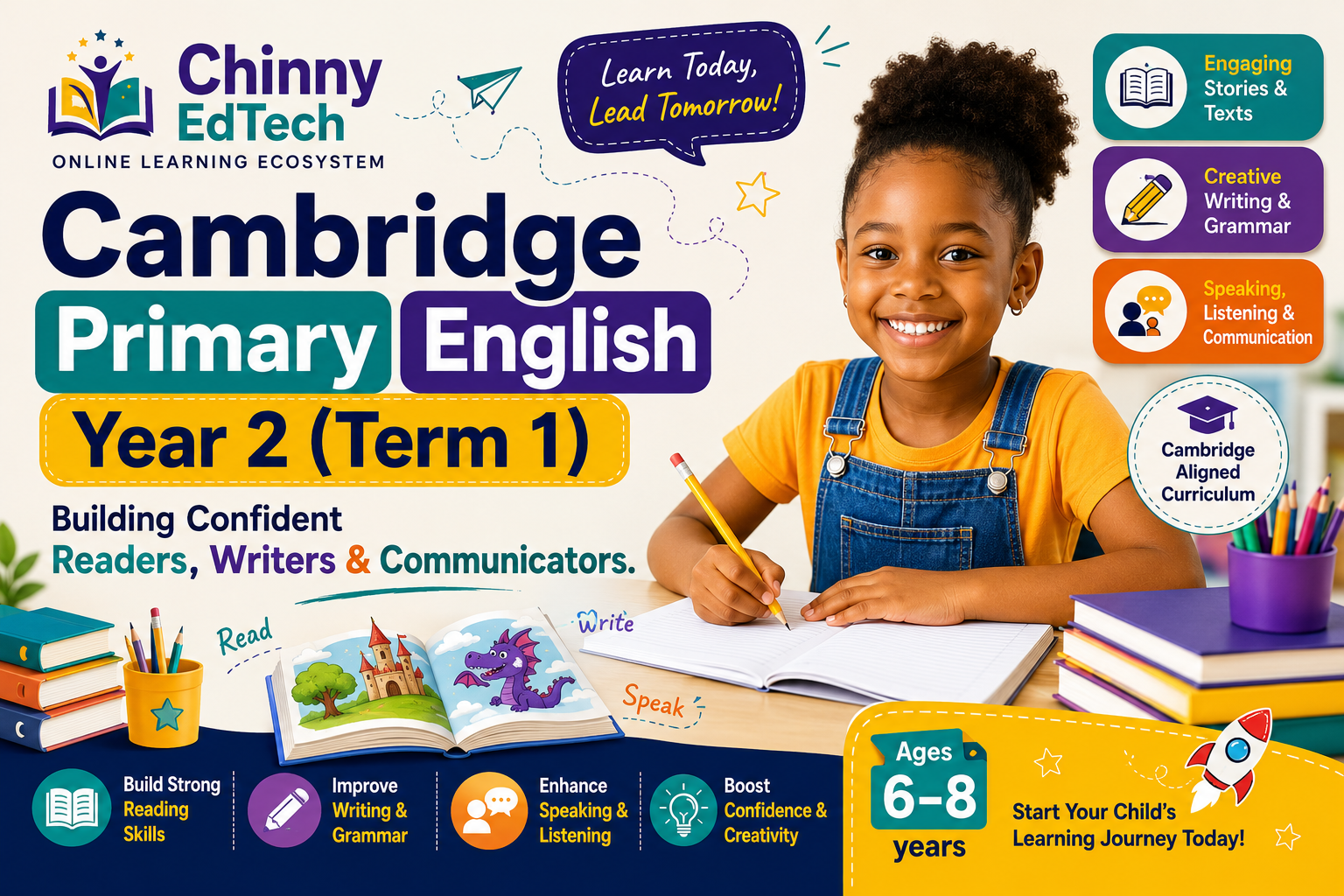
FIRST TERM YEAR 3 CAMBRIDGE SCHEME OF WORK
An engaging Cambridge-aligned English course that develops confident readers, creative writers, and effective communicators through interactive storie
 Chinny Ebozue
 Beginner
FIRST TERM YEAR 2 CAMBRIDGE SCHEME OF WORK
Learners develop stronger reading comprehension, communication, and creative thinking skills using the internationally recognized Cambridge Primary En
Chinny Ebozue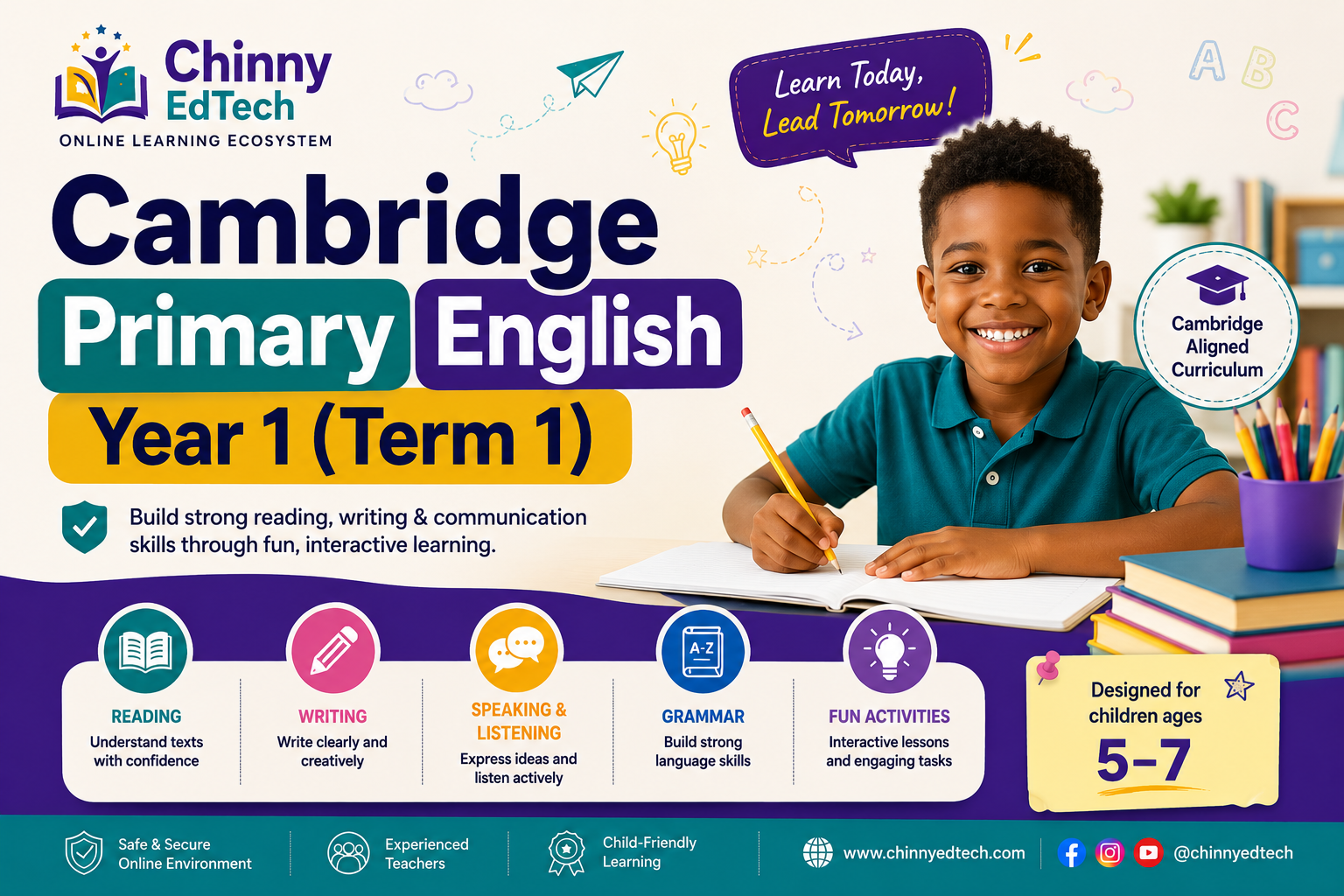 Beginner
FIRST TERM YEAR 1 CAMBRIDGE SCHEME OF WORK
A fun and engaging Cambridge-aligned English course that helps children build strong reading, writing, grammar, speaking, and listening skills through
Chinny Ebozue Beginner
Measure Performance Success
This video is part of the Google Digital Marketing & E-commerce Certificate. If you’re curious about the latest trends in technology and business, a c
 Michael Onyeka Ezeadichie
 Beginner
Digital Marketing & E-commerce Strategy
Digital Marketing & E-commerce Strategy
Michael Onyeka Ezeadichie Beginner
The Customer Journey & the Marketing Funnel
If you’re curious about the latest trends in technology and business, a career in digital marketing & e-commerce is within reach.
Michael Onyeka Ezeadichie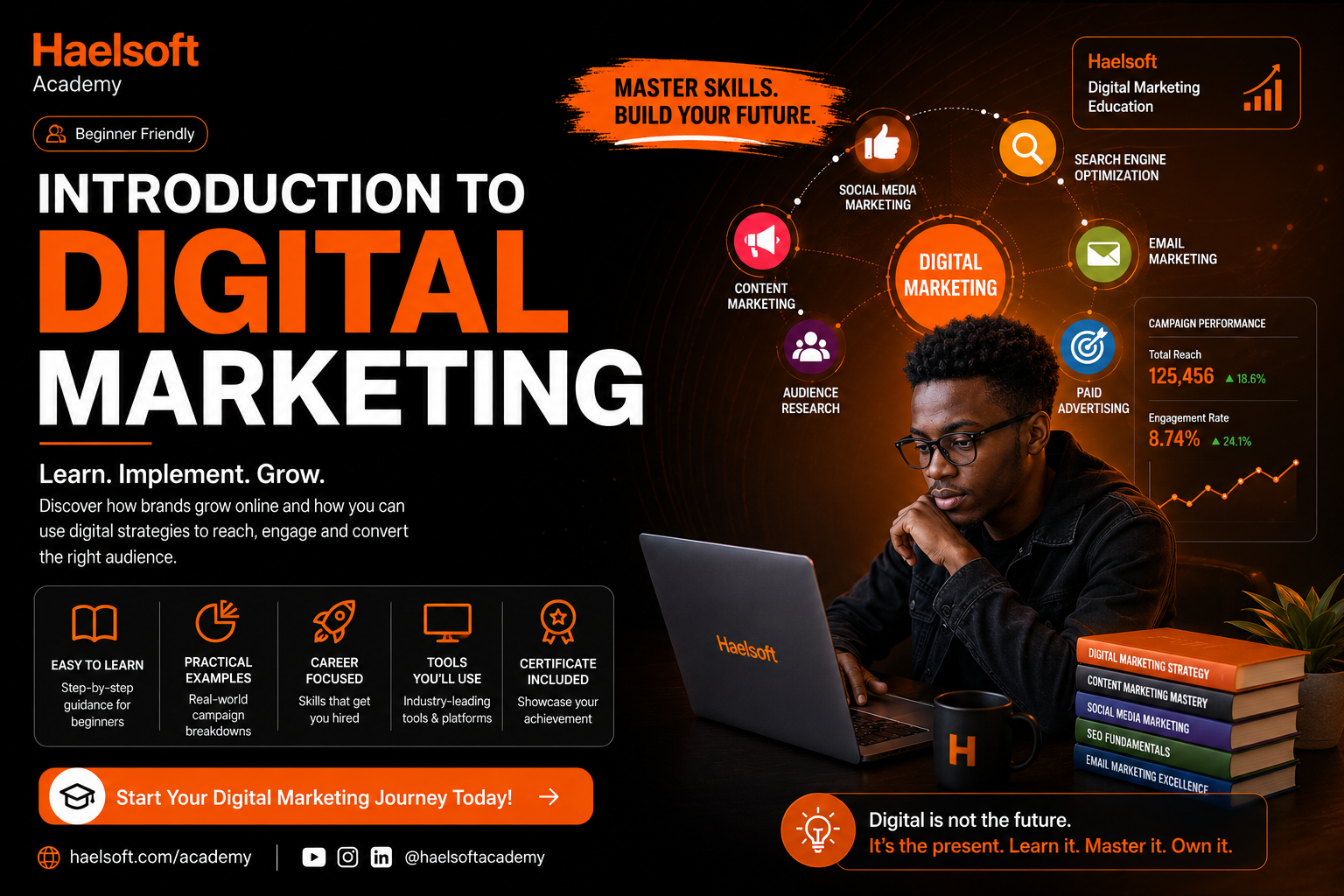 Beginner
Intro to Digital Marketing & E-commerce
Intro to Digital Marketing & E-commerce
Michael Onyeka Ezeadichie Beginner
Google Ads for Beginners: Create and Optimize Profitable Campaigns
Learn Google Ads from scratch and launch profitable campaigns.
 Goodluck Ndubuisi
 Beginner
Cyber Security
Learn the fundamentals of cybersecurity and gain the skills to protect systems, networks, and data from modern cyber threats.
 Beginner
Cyber Security Specialization
Introduction to Cyber Security is the study of protecting internet-connected systems, networks, and data from digital attacks. It equips learners with
Michael Onyeka EzeadichieDigital Products
 PDF
PDFBODY LANGUAGE SECRETS: A GUIDE DURING COURTSHIP & DATING.
BODY LANGUAGE SECRETS: A GUIDE DURING COURTSHIP AND DATING What if you could understand what someone is communicating—even when they say nothing? Body Language Secrets: A Guide During Courtship and Dating is a practical and insightful guide designed to help you understand the silent signals that often shape romantic connections. During courtship and dating, words are only part of the conversation. A person’s eye contact, facial expressions, posture, gestures, tone, personal space, and overall behavior can reveal comfort, interest, uncertainty, confidence, or emotional distance. Learning to recognize these signals can help you communicate more effectively and navigate relationships with greater awareness. This book explores the fascinating world of nonverbal communication and shows you how to become more observant without jumping to conclusions or misreading someone's intentions. You will learn how to pay attention to body language while also considering context, personality, culture, and the importance of direct comRecognize common signs of interest and engagement. Understand the meaning behind eye contact, facial expressions, and gestures. Become more confident in your own nonverbal communication. Notice signs of comfort, nervousness, hesitation, or emotional distance. Improve communication during the early stages of a relationship. Body Language Secrets is not about trying to read minds or manipulate people. It is about becoming more observant, communicating with greater confidence, and understanding that meaningful relationships are built through a combination of words, actions, respect, honesty, and emotional awareness.
 PDF
PDFEat Well, Think Well: The Essential Guide to Diet-Based Mental Health and Memory Protection. Simple Dietary Strategies for Emotional Balance and Brain Health.
Eat Well, Think Well: The Essential Guide to Diet-Based Mental Health and Memory Protection Subtitle: Simple Dietary Strategies for Emotional Balance and Brain Health Author: Chinyere Kalu Book Overview Are brain fog, mood swings, fatigue, and memory lapses holding you back from living your best life? The secret to sharper focus, emotional stability, and long-term cognitive protection isn't found in a pill bottle—it starts on your plate. In "Eat Well, Think Well," author Chinyere Kalu delivers a practical, science-backed roadmap designed to help you nourish your mind, optimize brain function, and safeguard your mental clarity at any age. Grounded in the powerful science of the gut-brain connection, this comprehensive guide reveals how simple, intentional adjustments to your daily diet can transform your emotional resilience and cognitive longevity. Whether you want to clear daily mental fatigue, stabilize your daily mood, or proactively protect your memory against age-related decline, this book provides actionable strategies to turn food into your ultimate brain-boosting tool. Key Takeaways & What You’ll Discover *The Gut-Brain Connection: Understand the direct link between your digestion and your mood and learn how targeting your microbiome can reduce stress and anxiety. *Brain-Boosting Superfoods: Identify key nutrients—including omega-3 fatty acids, antioxidants, essential minerals, and hydration strategies—that actively restore and sharpen memory. *Beating Brain Fog & Fatigue: Master practical meal choices that eliminate energy crashes, boost daily concentration, and sustain focus. *Emotional Balance Through Nutrition: Learn how targeted dietary changes support neurotransmitters like serotonin and dopamine for steady, reliable emotional wellness. *Long-Term Cognitive Protection: Implement simple, sustainable habits designed to protect your brain health, support neuroplasticity, and preserve memory for years to come. Invest in your mind today and unlock a lifetime of mental balance, vibrant energy, and unshakeable cognitive strength.
 PDF
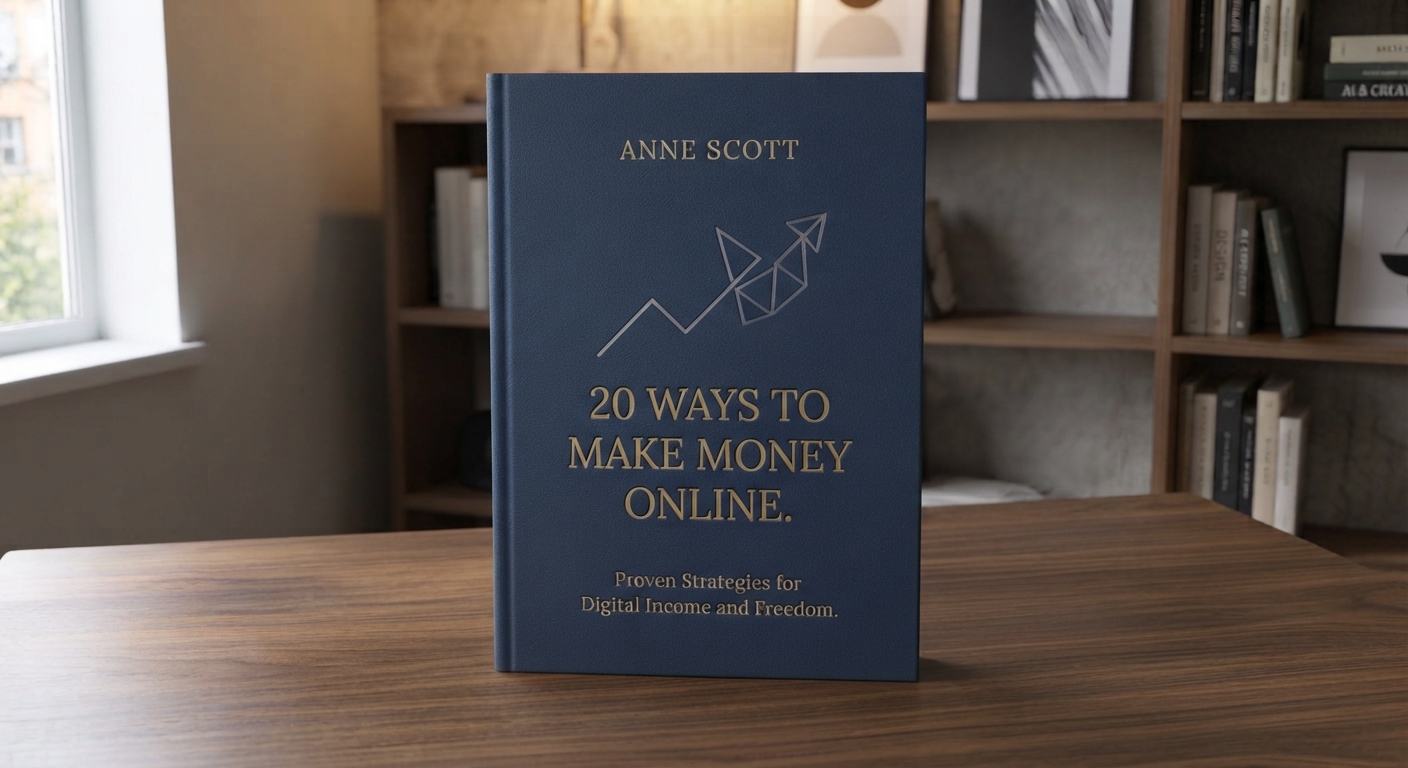
PDF20 Ways to Make Money Online with AI Practical Strategies to Turn Artificial Intelligence into Real Online Income.
20 Ways to Make Money Online Practical Strategies to Turn Artificial Intelligence into Real Online Income Are you tired of hearing about AI, but unsure how to actually use it to make money? The digital landscape has completely shifted. Artificial intelligence is no longer just a futuristic concept—it is the ultimate leverage tool for building real, sustainable online income streams. But knowing about AI isn’t enough. You need a proven blueprint. "20 Ways to Make Money Online" cuts through the noise. Written by digital strategist Anne Scott, this comprehensive guide delivers 20 highly practical, step-by-step strategies designed to transform modern AI tools into tangible digital revenue. Whether you are a complete beginner looking to launch your first digital product or an experienced creator wanting to scale your systems, this book gives you the exact framework to succeed. What You Will Discover Inside: The AI Advantage: How to harness cutting-edge artificial intelligence to automate content creation, marketing, and product development without a technical background. 20 Monetization Blueprints: Actionable, step-by-step methods ranging from digital product pipelines to high-converting online services. Systemized Growth: Learn how to build repeatable automated funnels that generate income around the clock. From Idea to Scale: Proven techniques to transition your side hustle into a sustainable, full-time online business. Who Is This Book For? Aspiring Entrepreneurs who want a clear, no-fluff roadmap to making their first dollar online. Content Creators & Freelancers looking to multiply their output and income using AI leverage. 9-to-5 Professionals searching for practical, low-barrier side hustles that transition into freedom models. Stop guessing. Start building. Don't let the AI revolution pass you by. Grab your copy of 20 Ways to Make Money Online today, build your automated systems, and take complete control of your digital future!
 PDF
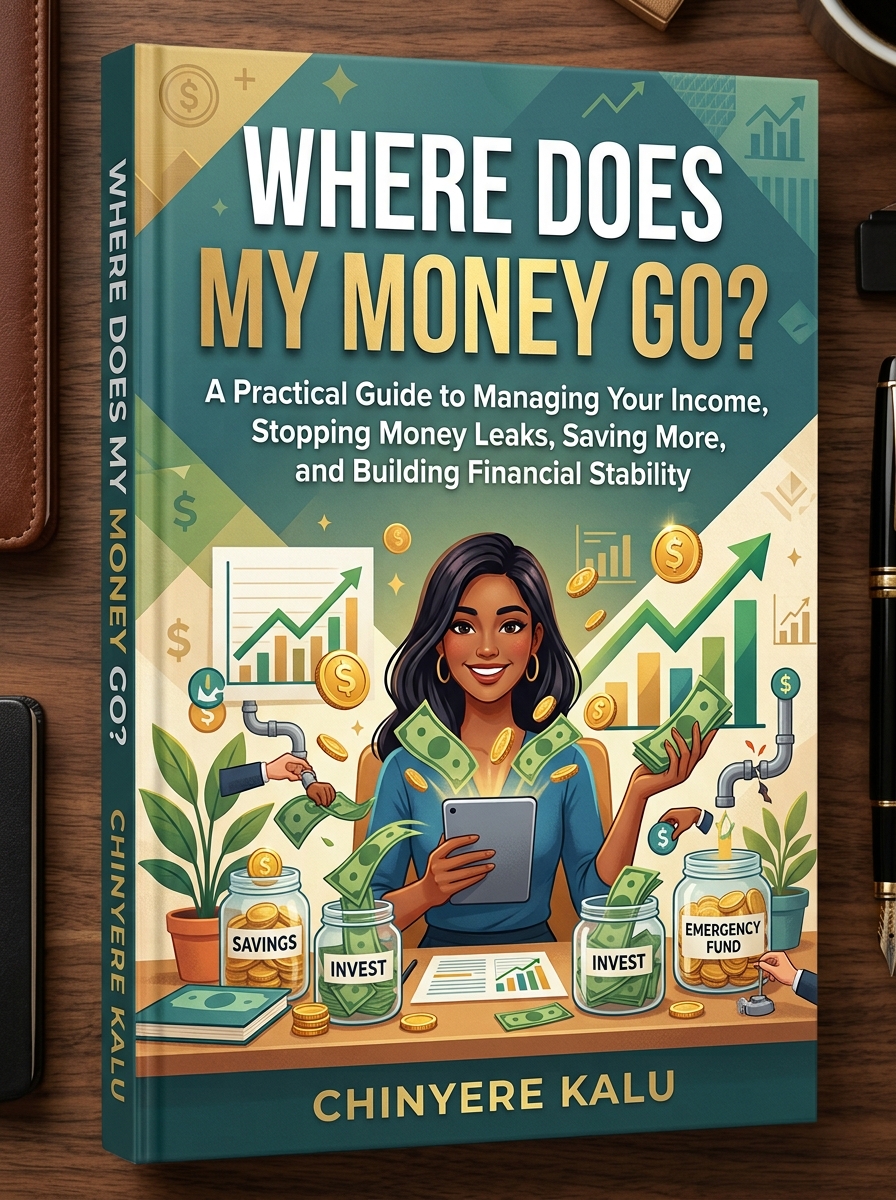
PDFWHERE DOES MY MONEY GO? A Practical Guide to Managing Your Income, Stopping Money Leaks, Saving More, and Building Financial Stability.
"Where Does My Money Go?" A Practical Guide to Managing Your Income, Stopping Money Leaks, Saving More, and Building Financial Stability* Do you ever wonder where your money goes after receiving your salary, business income, or other earnings? You earn money, pay a few bills, buy some things, and suddenly, there’s little or nothing left. If this sounds familiar, "Where Does My Money Go?" was written for you. This practical and easy-to-understand guide will help you take control of your money and develop healthier financial habits without making money management feel complicated or overwhelming. Inside this book, you’ll learn how to: * Understand exactly where your money is going. * Create a realistic budget that works with your income. * Identify and stop unnecessary spending and hidden money leaks. * Separate your needs from your wants. * Develop better saving habits, even when your income is limited. * Set realistic financial goals and work toward them. * Manage your spending without feeling deprived. * Build an emergency fund and prepare for unexpected expenses. * Avoid common financial mistakes that keep people stuck. * Develop a simple money-management system you can actually maintain. * Make smarter financial decisions for your present and future. * Build a stronger foundation for long-term financial stability. You don’t need to earn a huge income to start managing your money better. What matters is learning how to make intentional decisions with the money you already have. Whether you are a salary earner, entrepreneur, freelancer, student, or simply someone who wants to become better at managing money, this book provides practical strategies you can start applying immediately. Your money should have a purpose—not disappear without explanation. Start tracking it, managing it, saving it, and building a more financially stable future—one smart decision at a time.
African Small Business Social Media Marketing Kit — 100 Captions, 30 Ad Copies & 20 Templates
African Small Business Social Media Marketing Kit Struggling to know what to post or how to promote your business online? This practical digital marketing kit gives you ready-to-use content ideas and marketing resources to help you promote your business consistently on Facebook, Instagram, WhatsApp and other social platforms. Inside this digital kit, you’ll get: ✅ 100 ready-to-use social media captions ✅ 30 advertising copy templates ✅ 20 social media design template blueprints ✅ 30-day content calendar ✅ 15 AI prompts for creating marketing content faster ✅ Sales, promotional, educational and engagement content ideas ✅ Customer testimonial and trust-building content ✅ Simple marketing and conversion checklist Perfect for: Small business owners, online sellers, freelancers, digital marketers, salons, barbers, restaurants, boutiques, phone shops, service providers and entrepreneurs. Whether you're just starting your business or already selling online, this kit helps you spend less time wondering “What should I post today?” and more time promoting your products and services. 📥 Digital download — get instant access and start creating content today. This is a digital product. No physical item will be shipped.
 PDF
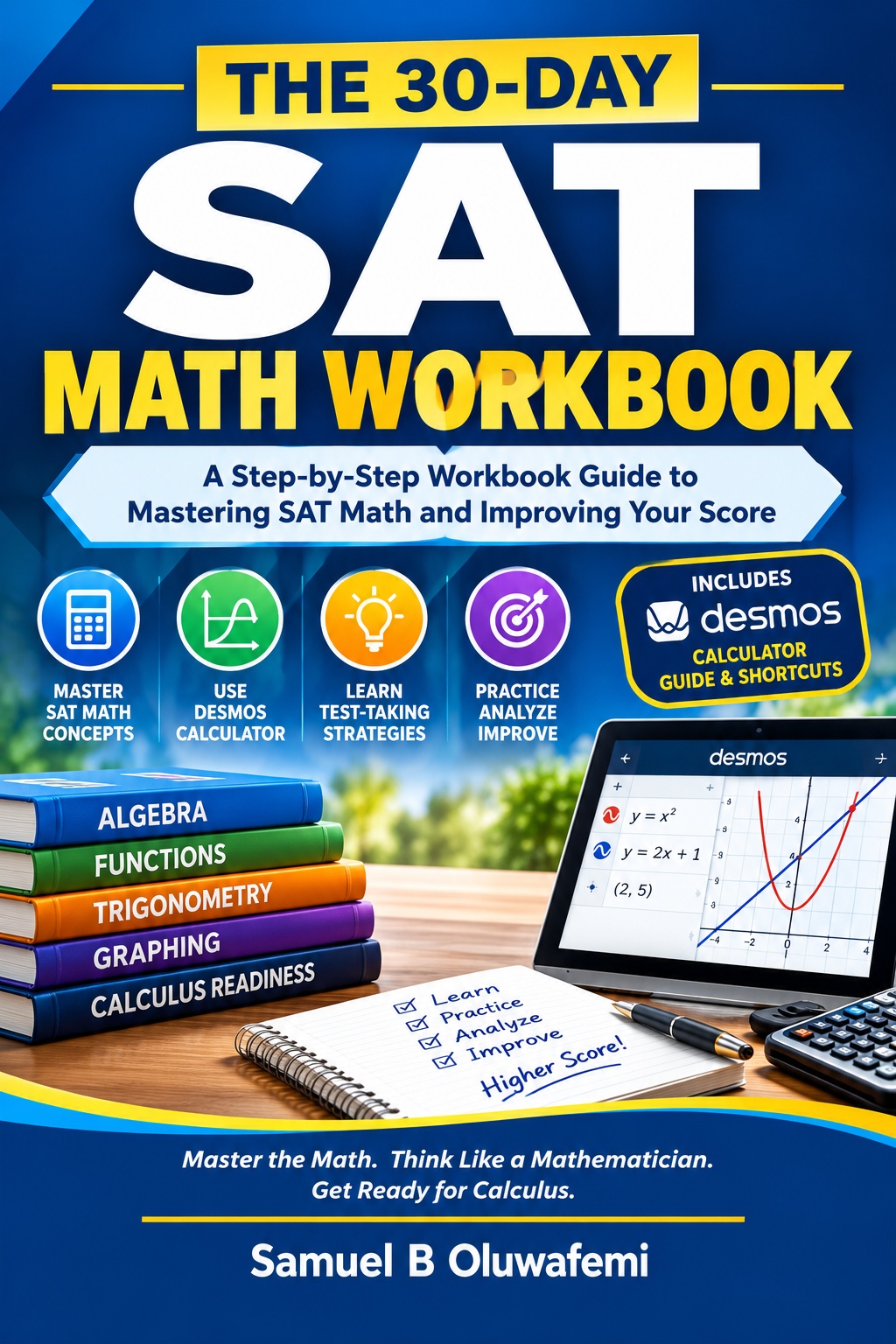
PDF30 DAYS TO SAT EXAM WORKBOOK
The 30 Days SAT Exam Workbook is a practical, focused guide designed to help students prepare for the SAT Math section with a clear 30-day plan. Instead of overwhelming students with endless theory, it combines targeted practice, strategic problem-solving, timed exercises, error analysis, and effective use of the Desmos calculator to build both accuracy and confidence. Each day focuses on specific skills and exam strategies, helping students identify weaknesses, correct mistakes, manage time, and develop the habits needed to approach SAT questions with greater confidence. Whether you are starting your preparation or looking for a structured final-month revision plan, this workbook provides a step-by-step path from diagnosis to practice, improvement, and test-day readiness.
 PDF
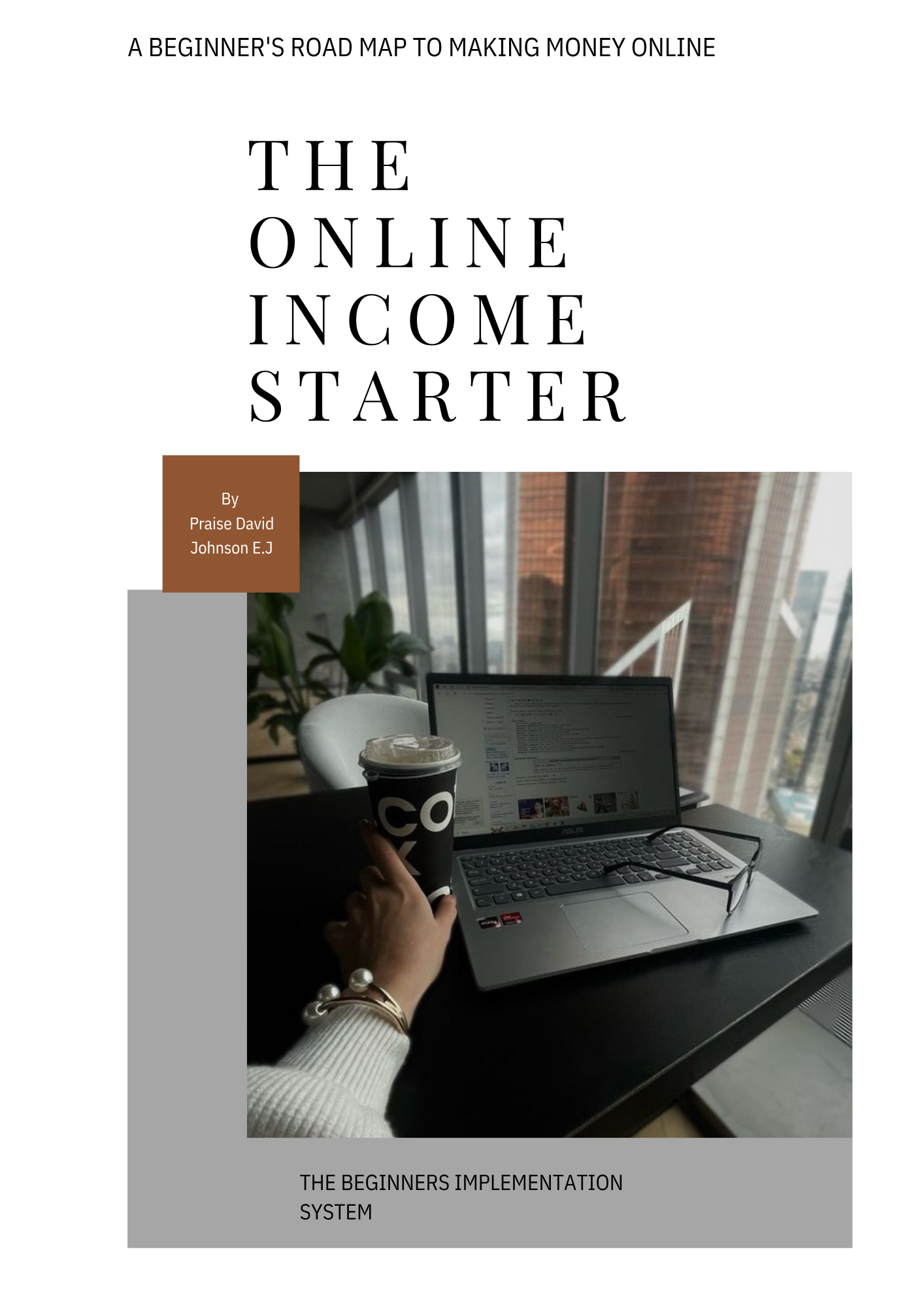
PDFThe Online Income Starter
💻 ONLINE INCOME STARTER Your Beginner-Friendly Guide to Building Income Online Ready to turn your phone, skills, and internet connection into an opportunity to earn? Online Income Starter is a practical beginner’s guide designed to help you understand how online income works and discover realistic ways to get started—even if you have little or no previous experience. Inside, you’ll learn how to: ✨ Discover online income opportunities that match your skills and interests ✨ Understand different ways people make money online ✨ Choose the right online income path for you ✨ Avoid common mistakes and online money-making scams ✨ Start with what you already have instead of waiting for everything to be perfect ✨ Build useful skills that can create long-term opportunities ✨ Take practical steps toward your first online income Whether you’re a student, young entrepreneur, beginner, or simply looking for an additional source of income, this ebook gives you a clear starting point without overwhelming you with complicated information. 🚀 Stop wondering where to begin. Start building your online income journey today. Your first step toward earning online starts with knowing what to do—and this guide is here to help you take that first step.
 PDF
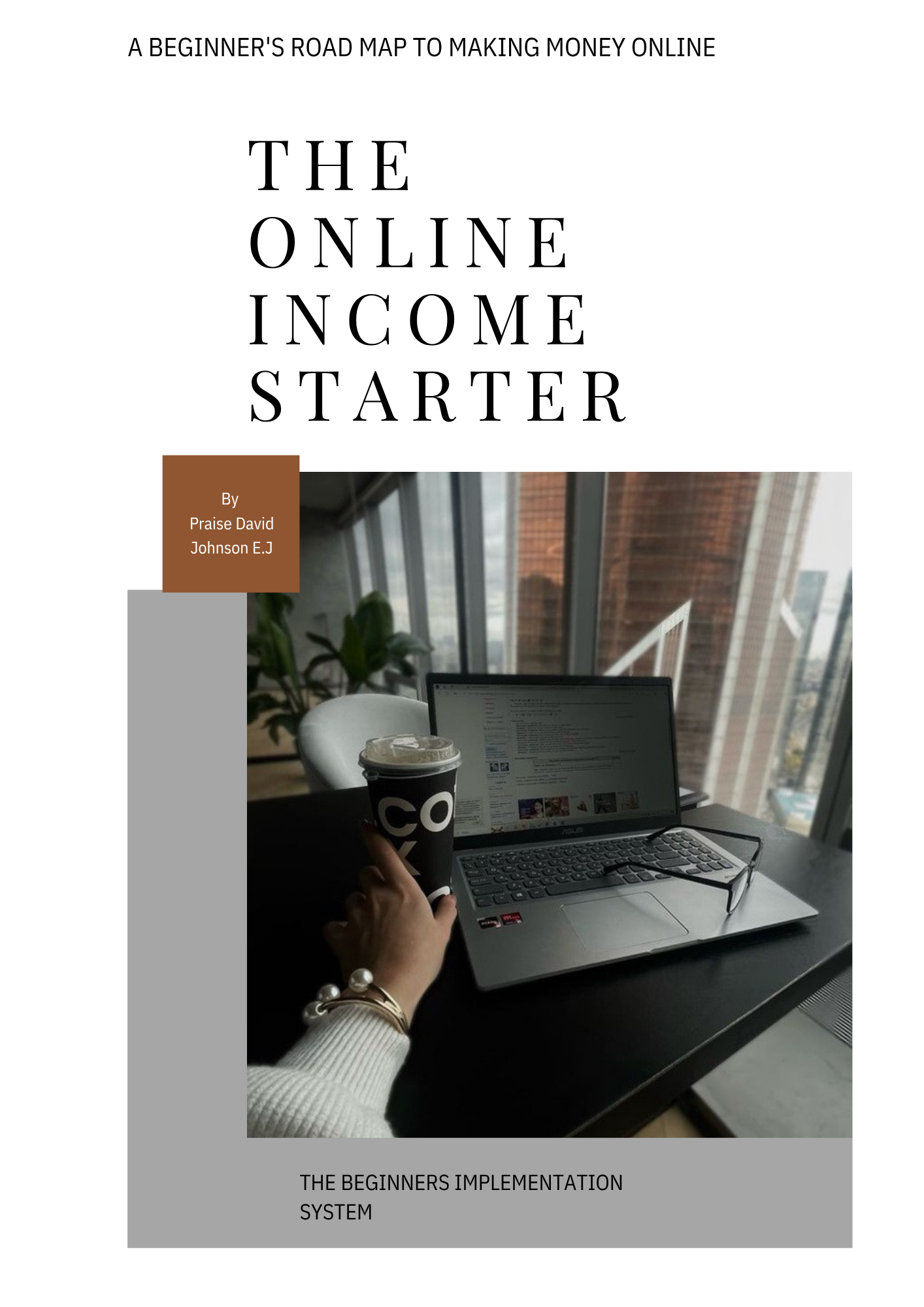
PDFThe Online Income Starter
💻 ONLINE INCOME STARTER Your Beginner-Friendly Guide to Building Income Online Ready to turn your phone, skills, and internet connection into an opportunity to earn? Online Income Starter is a practical beginner’s guide designed to help you understand how online income works and discover realistic ways to get started—even if you have little or no previous experience. Inside, you’ll learn how to: ✨ Discover online income opportunities that match your skills and interests ✨ Understand different ways people make money online ✨ Choose the right online income path for you ✨ Avoid common mistakes and online money-making scams ✨ Start with what you already have instead of waiting for everything to be perfect ✨ Build useful skills that can create long-term opportunities ✨ Take practical steps toward your first online income Whether you’re a student, young entrepreneur, beginner, or simply looking for an additional source of income, this ebook gives you a clear starting point without overwhelming you with complicated information. 🚀 Stop wondering where to begin. Start building your online income journey today. Your first step toward earning online starts with knowing what to do—and this guide is here to help you take that first step.
 PDF
PDFHow to Build, Execute, and Scale a Social Media Strategy That Drives Real Business Results
Introduction: Strategy Is the Difference Between Presence and Performance There is an enormous gap between being on social media and using social media effectively. The gap is not about follower count, posting frequency, or even content quality in isolation. It is about strategy — the coherent set of decisions that determines which platforms you use, who you are trying to reach, what you say and how you say it, how often you show up, what you measure, and how you improve. Most businesses and individuals on social media are executing tactics without strategy. They post when they remember to, on platforms they chose because everyone else is on them, about topics that felt relevant in the moment, with no clear picture of what success looks like or whether they are moving toward it. This approach occasionally produces accidental wins, but it cannot produce consistent, compounding results. This book provides the strategic architecture that converts social media from a time-consuming obligation into a genuine business growth engine. It covers the four foundational decisions every effective social media strategy requires: who you are trying to reach, where those people are, what content will serve and attract them, and how you will measure whether it is working. Everything else — the specific platform tactics, the content formats, the posting tools — is execution that flows from these strategic decisions. This is not a beginner's introduction to social media platforms. It is a strategist's guide to making social media work systematically, sustainably, and at scale. Table of Contents Chapter One: Social Media Strategy vs Social Media Tactics Chapter Two: Platform Selection — Where Should You Actually Be? Chapter Three: Audience Research for Social Media Chapter Four: Content Strategy and the Content Pillar Model Chapter Five: Content Production Systems and Workflows Chapter Six: Community Management and Engagement Chapter Seven: Social Media Analytics and Reporting Chapter Eight: Scaling a Social Media Strategy Strategy answers the why and the what: why are you on social media, what are you trying to achieve, who are you trying to reach, and how does social media fit into your broader marketing and business model? Tactics answer the how: which tools to use, what format to post in, how often to show up, how to respond to comments. The distinction matters because tactics without strategy are random acts of content. Posting a Reel on Monday and a carousel on Wednesday and a Story on Thursday — without a clear understanding of who those posts serve, what response they are designed to produce, and how they ladder up to a business outcome — is activity masquerading as marketing.
 PDF
PDFEverything You Need to Understand, Plan, and Launch Your Digital Marketing
Digital marketing is not a department. It is not a set of tools. It is not something reserved for large companies with dedicated teams and six-figure budgets. Digital marketing is the practice of using the internet — its platforms, its search engines, its communication channels, and its data — to connect the right products and services with the right people at the right moment. And it is now the most accessible, most measurable, and most learnable business growth skill available to any individual or organisation anywhere in the world. This book is the starting point — the complete foundation for anyone who wants to understand digital marketing fully before specialising in any part of it. It covers every major channel without assuming prior knowledge. It explains every important metric without jargon. It provides a practical framework for building a digital marketing strategy that fits your business, your budget, and your goals. Whether you are a small business owner building your first online presence, a marketing professional who has worked in one channel and wants to understand the full landscape, a career changer entering the field, or an entrepreneur learning the skills that will drive your business growth — this book gives you the complete foundation. Not a surface-level overview. The real understanding that enables confident, effective action. By the final chapter, you will have a clear picture of every digital marketing channel, know which ones deserve your attention first given your specific situation, understand how they work together, and have a 90-day plan you can begin executing immediately. Table of Contents Chapter One: What Is Digital Marketing and Why It Matters Chapter Two: Understanding Your Audience Online Chapter Three: The Core Digital Marketing Channels Chapter Four: Building Your Digital Marketing Foundation Chapter Five: Content — The Fuel of Every Digital Channel Chapter Six: Understanding Digital Marketing Metrics Chapter Seven: The Digital Marketing Strategy Framework Chapter Eight: Launching Your First Digital Marketing Campaign Digital marketing encompasses every marketing activity conducted through digital channels — search engines, social media platforms, email, websites, mobile apps, and any other internet-connected medium. It includes both organic activities (those that do not require payment to distribute) and paid activities (advertising and promotion), and spans every stage of the customer journey from first awareness through loyal advocacy. The simplest accurate definition: digital marketing is using the internet to get your message to the right people, in the right place, at the right time, and to measure exactly what happens as a result. That last part — the measurement — is what makes digital marketing fundamentally different from every marketing medium that preceded it.
 PDF
PDFThe girl the billionaire couldn't buy
What happens when a billionaire who can buy almost anything meets the one woman he can’t control? Zara never imagined that one unexpected opportunity would change her life forever. She enters the world of wealth, power, secrets, and impossible rules—and finds herself drawn to a man who is used to getting whatever he wants. But Zara isn't for sale. As their lives become tangled together, attraction turns into something neither of them expected. Can love survive the difference between their worlds? A captivating billionaire romance filled with love, secrets, emotional tension, and unexpected twists.
 PDF
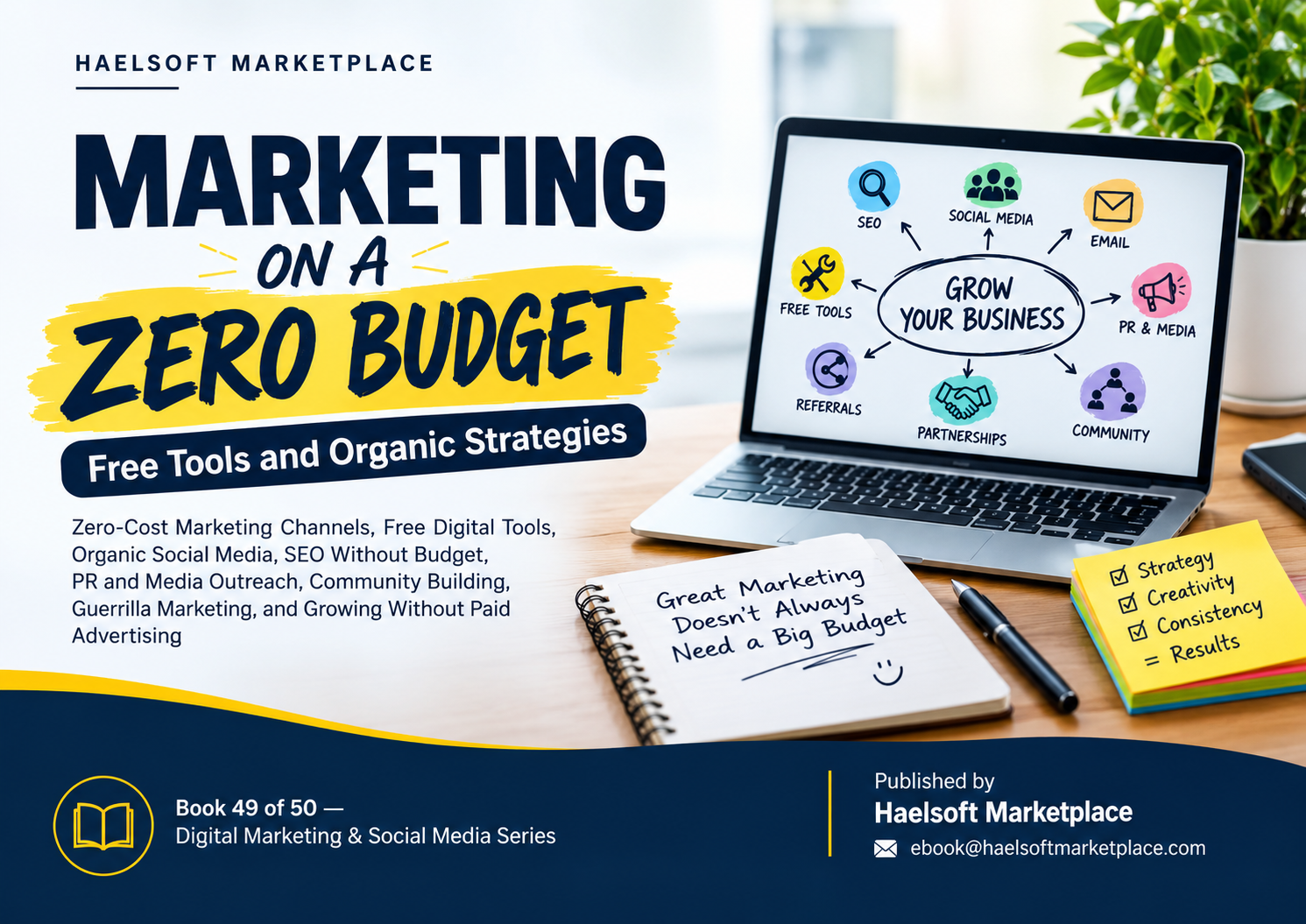
PDFMarketing on a Zero Budget: Free Tools and Organic Strategies
Marketing on a Zero Budget is a practical guide for entrepreneurs, small business owners, marketers, creators, and anyone looking to grow a brand without relying on a large advertising budget. The book focuses on using resourcefulness, creativity, time, and consistency to build sustainable marketing results.
 PDF
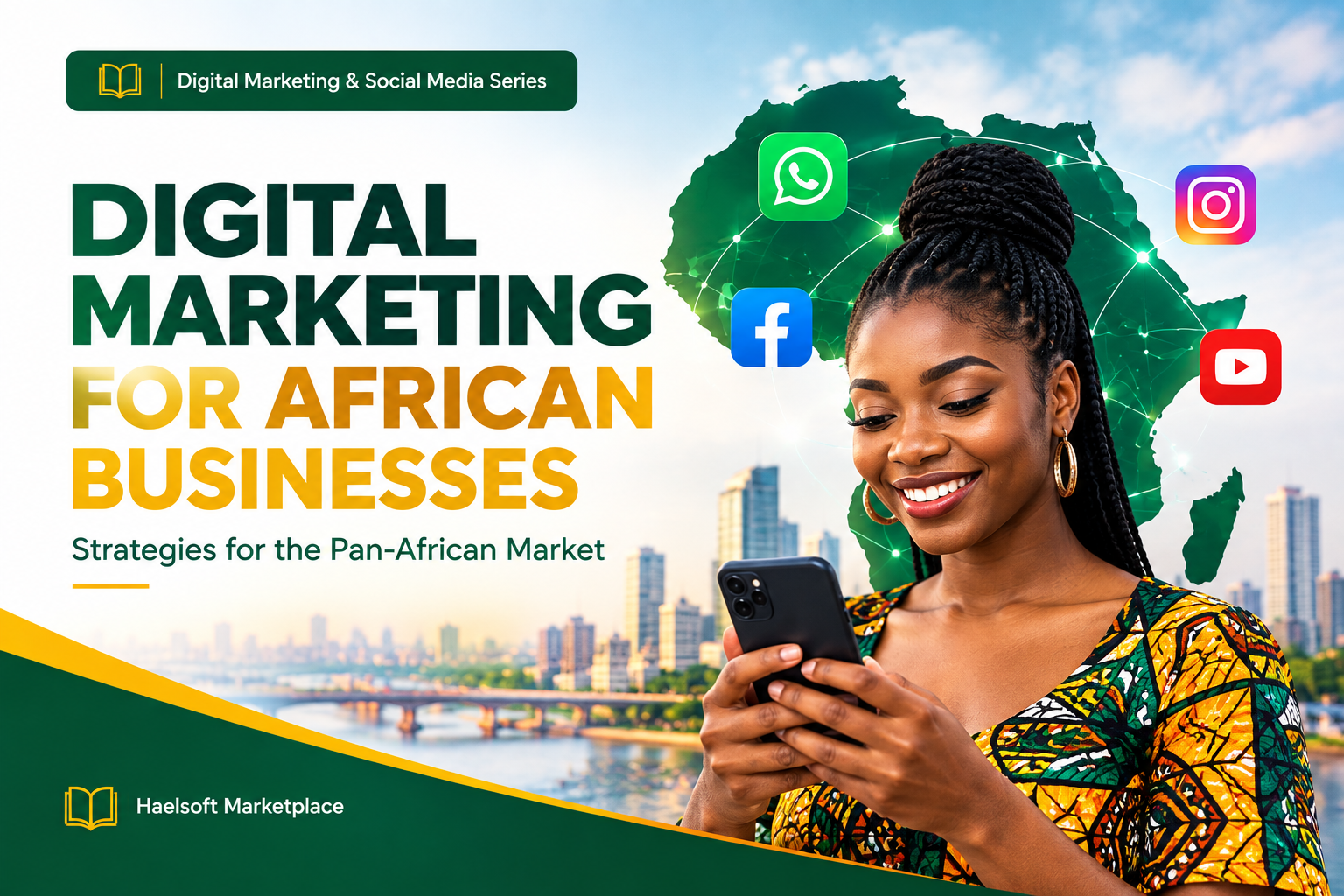
PDFDigital Marketing for African Businesses: Strategies for the Pan-African Market
A practical guide to digital marketing for African businesses, with a strong focus on Nigeria, West Africa, and the wider Pan-African market. The book explores African consumer behaviour, mobile-first marketing, platform strategies, WhatsApp marketing, digital payments, localised content, influencer marketing, cross-border marketing, diaspora audiences, and building for Africa’s growing digital economy. It is designed for entrepreneurs, business owners, marketers, digital professionals, and anyone looking to understand how to market effectively to African consumers and build successful digital strategies across African markets.
 PDF
PDFCONSTRUIS TON SYSTÈME DE REVENUS EN LIGNE
Un guide pratique pour débuter, même si tu ne connais pas encore grand-chose au numérique. Le guide pratique contient : ✅ Les différentes façons de générer des revenus sur Internet ✅ Les produits numériques et les services en ligne ✅ L’affiliation ✅ Comment créer une offre ✅ Comment trouver des clients ✅ Comment organiser ton activité étape par étape ✅ Des checklists, modèles et tableaux de suivi Pas besoin d’être un expert pour commencer.
 PDF
PDFKIKO LE PETIT SINGE - Le secret du Grand Baobab
Au cœur de la savane africaine vit Kiko, un petit singe curieux, joyeux… mais qui doute parfois de lui-même. Un jour, après une mystérieuse disparition, Kiko doit s'aventurer seul jusqu'au grand baobab, un arbre immense dont tout le monde connaît les légendes. Sur son chemin, Kiko découvre que le courage ne dépend ni de la taille ni de la force. Même lorsqu'il a peur, il décide d'avancer. 🌳 Une histoire tendre et captivante qui invite à découvrir le courage, la confiance en soi, la persévérance et la force de croire en ses capacités. 📖 Une belle aventure africaine à partager en famille, à lire avant le coucher ou à offrir à un enfant.
 PDF
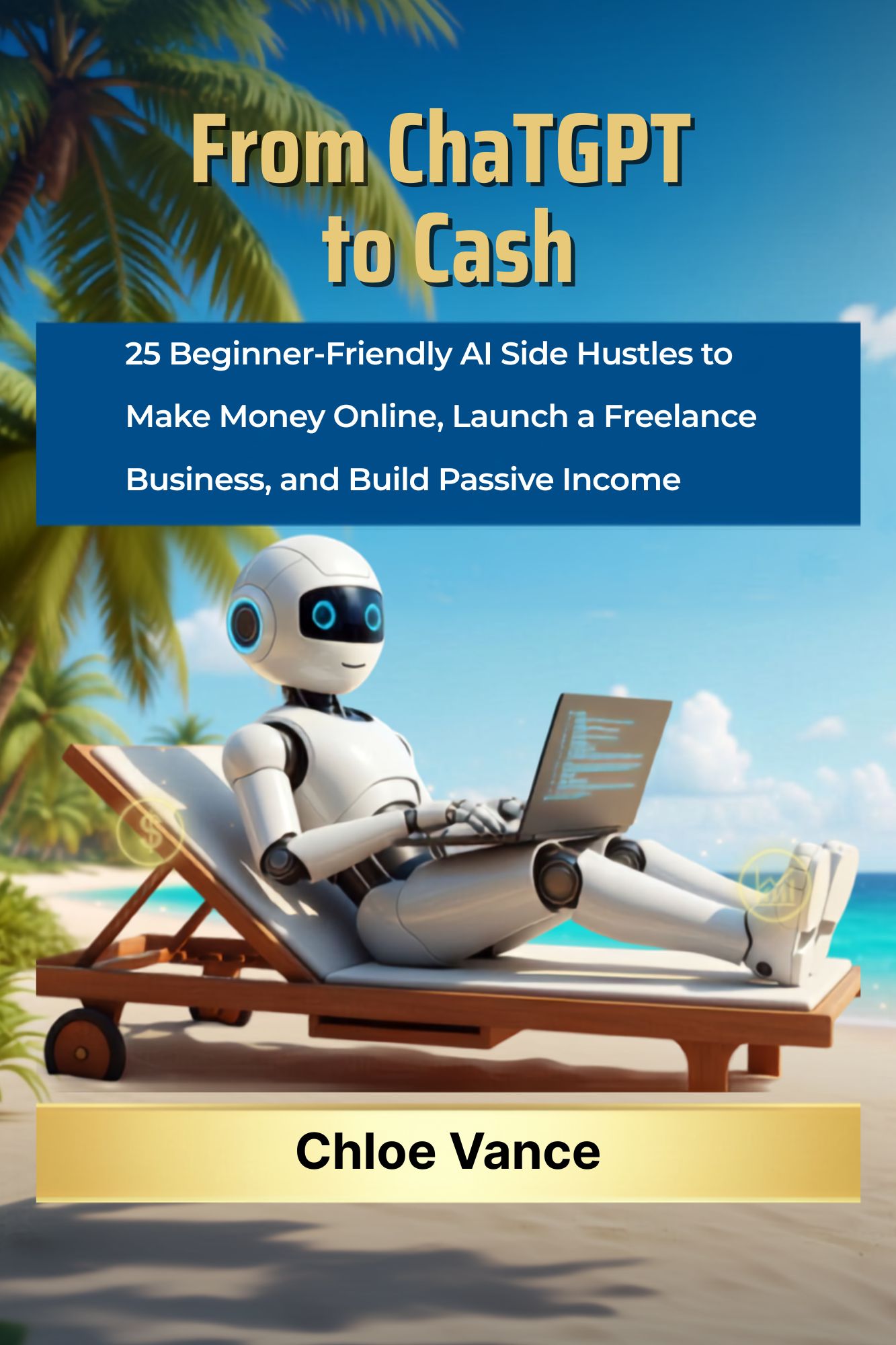
PDFFrom ChatGPT to Cash: 25 Beginner-Friendly AI Side Hustles to Make Money Online, Sell Digital Products, Freelance and Build Passive Income
From ChatGPT to Cash is a practical, beginner-friendly guide featuring 25 AI-powered side hustles you can explore using ChatGPT and other AI tools. Learn how to turn AI into real-world opportunities through digital products, freelancing, content creation, online services, and additional income streams. Designed for aspiring digital creators, freelancers, entrepreneurs, and beginners, this ebook provides actionable ideas to help you move from simply using AI to applying it productively and building valuable digital skills.
 PDF
PDFThe Roadmap to Working for Global Remote Companies
This book is for anyone interested in remote work opportunities in Nigeria and beyond.
 File
FilePortrait
Size: 16x24 Medium: Pastel Glass frame
 File
FilePortrait
Size: 24x36 Mixed Medium: Pencil and Acrylic Glass frame.
 File
FilePortrait
Size: 12x16 Medium: Pencil and Charcoal Glass Frame.
 PDF
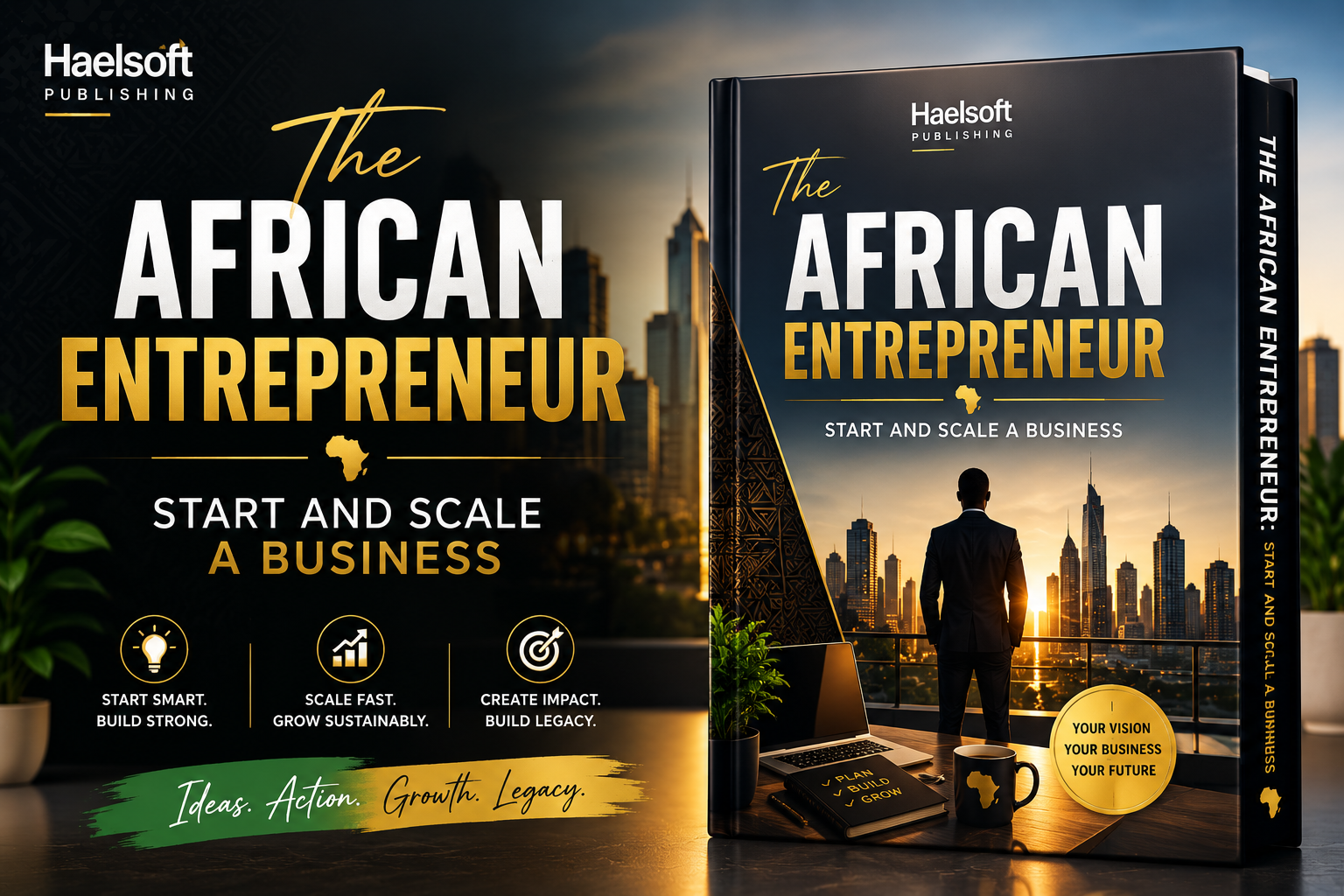
PDFThe African Entrepreneur: Start and Scale a Business
Africa is the entrepreneurial continent. Not because poverty forces people into self-employment — though it sometimes does — but because African people have always created, traded, built, and innovated with a resourcefulness that the rest of the world is only beginning to fully appreciate. From the ancient trade routes of the Sahara to the bustling markets of Lagos, Nairobi, Accra, Johannesburg, and Dar es Salaam; from the informal kiosks that line every African city street to the technology startups that are attracting billions of dollars in global venture capital — Africa's entrepreneurial spirit is not a recent phenomenon. It is the continent's oldest and most enduring tradition. What is new is the convergence of conditions that makes this the most extraordinary moment in African entrepreneurial history. Mobile internet has reached hundreds of millions of Africans who had never previously had access to global markets, information, or digital tools. A young, rapidly urbanising population — the youngest median age of any continent on Earth — is creating enormous consumer demand across every sector. African governments, however imperfectly, are improving the regulatory environment for business in ways that were not true a generation ago. And a growing diaspora of highly educated, globally connected African professionals is returning — physically or through investment and knowledge — to build on the continent. This book is written for every African who has a business idea burning inside them and wants to know how to turn it into reality. For the market trader who wants to scale beyond the stall. For the professional who dreams of leaving employment and building something of their own. For the student who graduates and sees more opportunity in entrepreneurship than in the corporate job search. For the diaspora professional who wants to invest their global skills and experience in African opportunity. And for every African entrepreneur already in the arena who wants to grow from small to medium, from medium to large, from local to regional to continental. What you will find in these pages is not motivational theory. It is practical, Africa-tested business knowledge drawn from the experiences of entrepreneurs who have built real businesses on African soil — navigating the infrastructure challenges, the capital constraints, the regulatory complexity, and the cultural dynamics that make African entrepreneurship simultaneously more challenging and more rewarding than entrepreneurship in any other context.
 PDF
PDFA Complete Guide to Financial Freedom in the Nigerian Economy
Nigeria is a country of extraordinary contradictions. It is Africa's largest economy, blessed with vast natural resources, a young and entrepreneurial population, and a creative energy that is visible in everything from its technology startups to its music industry. Yet millions of Nigerians struggle with financial insecurity, inflation erodes savings faster than they can accumulate, and the gap between the wealthy and the struggling majority continues to widen. This book is written for the Nigerian who refuses to accept financial limitation as their destiny. It is written for the Lagos market trader who wants to turn profit into sustainable wealth. For the Abuja civil servant wondering how to make their salary work harder. For the Port Harcourt graduate stepping into the workforce and determined to build differently from the generation before. For the Owerri entrepreneur ready to scale from survival to abundance. And for every Nigerian, in every city and state, who looks at the financial challenges of this country and thinks: there must be a better way. There is. And this book will show it to you. What you are holding is not a book of abstract financial theory. Every strategy in these pages has been filtered through the specific realities of the Nigerian economic environment — the inflation, the naira devaluation, the unstable power supply, the bureaucratic hurdles, and the incredible informal sector that functions as an economic force of its own. The strategies you will find here work in Nigeria, not just in the theoretical economies of Western textbooks. Building wealth in Nigeria requires a particular kind of financial intelligence. It requires understanding how to protect the purchasing power of your money when inflation runs high. It requires knowing which assets appreciate in naira terms, which provide dollar-denominated value, and which generate cash flow that outpaces the rising cost of living. It requires the patience to invest when others panic, and the discipline to save when the culture around you celebrates spending. This book covers eight comprehensive areas of Nigerian personal finance and wealth building. By the time you finish it, you will have a complete framework for understanding money, making it grow, protecting it from the economic forces that erode it, and using it to create a legacy that extends beyond your own lifetime.
 PDF
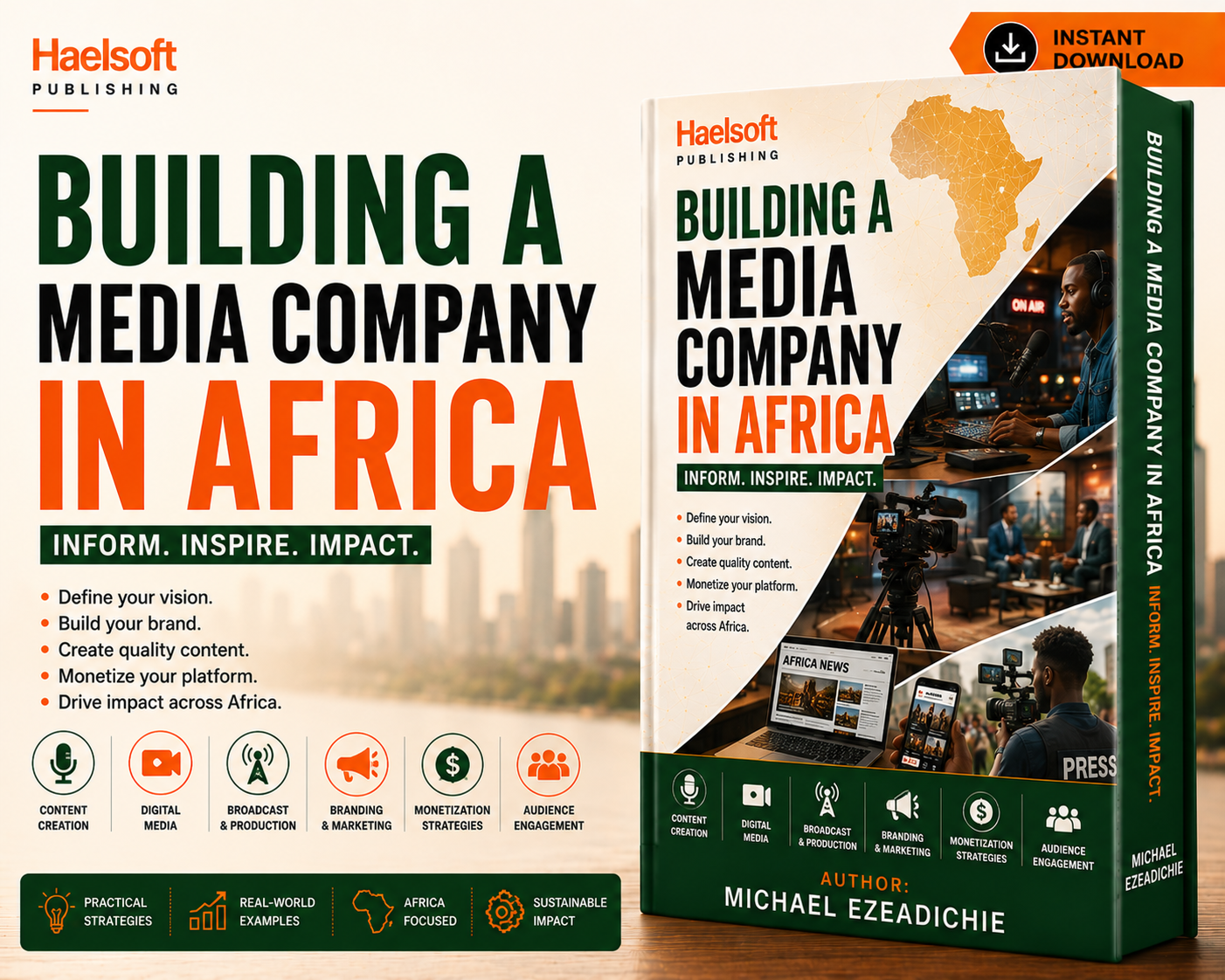
PDFThe Complete Guide to Launching and Growing Television, Radio, Digital Media, Podcast, Film Production, and Content Companies in Africa's Dynamic and Fast-Evolving Media Markets
The story of African media over the next twenty years will be one of the most commercially significant and most culturally consequential transformations in global media history. A continent of 1.4 billion people — the world's youngest population, rapidly urbanising, progressively digitising, speaking thousands of languages with rich creative traditions — is building its own media infrastructure from scratch. And this time, it is African entrepreneurs, African storytellers, and African capital that are doing the building. The global streaming platforms have noticed. Netflix's investment in African originals — Blood Sisters in Nigeria, Queen Sono in South Africa, Lionheart — signals that the world's most powerful entertainment company sees African content as a global commercial opportunity, not just a development charity. Spotify has made significant investments in African podcasting. YouTube's top creators include African-origin channels with tens of millions of subscribers. TikTok's fastest growing markets include Nigeria and South Africa. But the opportunity extends far beyond international platform investment in African content. Africa needs its own media companies — newspapers and digital publications that investigate power, radio stations that reach rural communities in local languages, television channels that reflect African lives, podcast networks that serve Africa's intellectual and creative communities, film production houses that tell African stories with African craft and African investment. These companies create jobs, distribute knowledge, build culture, and sustain the democratic accountability that only independent media can provide. This book is the complete guide to building a media company in Africa — for the entrepreneur launching a digital news platform, the broadcaster building a radio network, the content creator scaling to a production company, the investor evaluating African media opportunities, and the media professional who wants to understand the business behind the content. It covers every major media format, the specific business models that work in African markets, the regulatory landscape, the talent requirements, and the strategic decisions that determine whether a media business thrives or fails. Africa's media moment is here. This book shows you how to build in it. Table of Contents Chapter One: The African Media Landscape — Opportunity and Challenge Chapter Two: Building a Digital Media and News Company Chapter Three: Radio Broadcasting — Africa's Most Powerful Medium Chapter Four: Television and Video Production Chapter Five: Film and Entertainment Production Chapter Six: Podcast and Audio Media Companies Chapter Seven: Media Business Models and Revenue Diversification Chapter Eight: Media Technology, Infrastructure, and Operations Chapter Nine: Regulatory Compliance and Media Law Chapter Ten: Scaling and Sustaining an African Media Company
 PDF
PDFThe Complete Guide to Recruiting, Retaining, and Developing Talent in African Organisations
Africa has the world's youngest population. By 2030, Africa will be home to the world's largest workforce — over 600 million working-age people producing goods, services, and innovation in economies that span subsistence agriculture to cutting-edge fintech. This demographic reality is simultaneously Africa's greatest development opportunity and its most complex management challenge. The organisations that will win in Africa's competitive future are those that figure out how to recruit the best of this talent, develop it systematically, retain it against aggressive competition, and build the cultures that attract the most ambitious and the most capable. In a continent where natural resources are increasingly commoditised, where technology is rapidly democratised, and where capital is increasingly available to well-managed businesses, the quality of an organisation's people management is emerging as the primary source of sustainable competitive advantage. Yet African HR management faces challenges that no textbook written for Western corporate contexts fully addresses. The tension between professional merit and family or ethnic network loyalty in hiring decisions. The management of multi-generational workforces where respect for authority coexists with the expectations of ambitious millennials. The complexity of compensation in high-inflation, depreciating-currency environments. The legal compliance requirements that span 54 countries with different employment law frameworks. The talent retention challenge when your best employees are recruited by international companies offering salaries denominated in hard currency. This book addresses all of these challenges — practically, honestly, and with respect for the specific cultural and economic contexts in which African HR professionals work. It draws on the experience of Africa's most successful organisations across multiple sectors and geographies, and it provides the frameworks, tools, and insights that HR professionals and business leaders need to build world-class people management capability in African organisations. Your people are your organisation's greatest asset. This book shows you how to treat them that way — and how to build the HR systems that convert that belief into competitive advantage.
 PDF
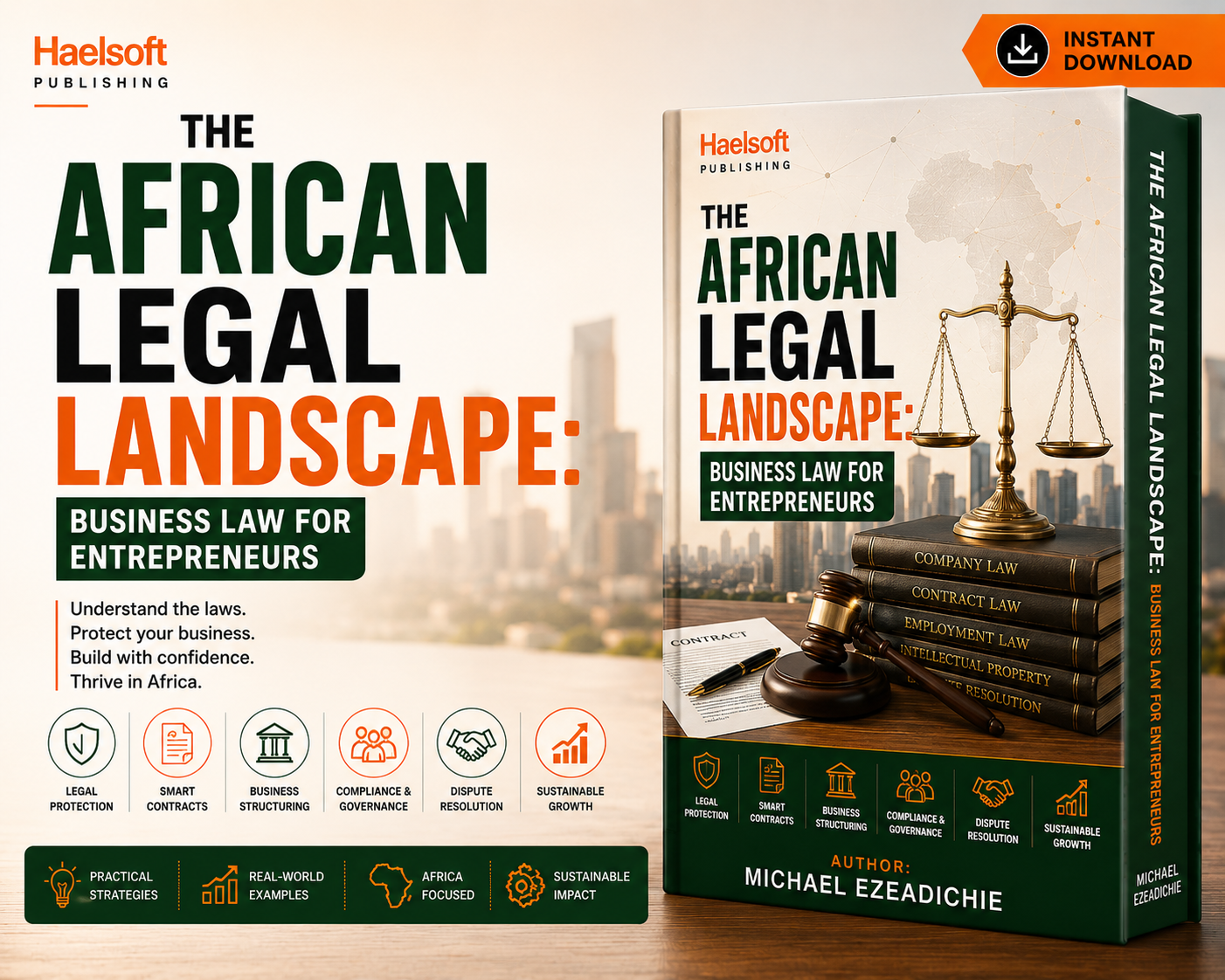
PDFThe African legal landscape for entrepreneurs
The Nigerian entrepreneur who started a technology company without a shareholders' agreement discovered — when his co-founder resigned and sought to take the product with him — that he had no documented proof of who owned what. The Ghanaian retailer who signed a lease agreement without reading the fine print discovered — when her landlord evicted her eighteen months into a five-year business — that the agreement contained a clause allowing termination on three months' notice. The Kenyan food producer who spent $80,000 developing and launching a brand discovered — when a competitor launched an identical-looking product — that she had never registered her trademark and had no legal basis to prevent the imitation. These stories repeat themselves thousands of times across African business communities every year. Not because African entrepreneurs are careless or unintelligent — but because they are operating in complex legal environments without the legal knowledge needed to protect their businesses, their investments, and their interests. This book is not a legal textbook. It is a practical guide for African entrepreneurs and business professionals who want sufficient legal intelligence to make informed decisions, to recognise when they need professional legal advice, and to engage more productively with the lawyers they hire. It does not replace a lawyer — it makes the lawyer relationship more valuable. Africa's 54 countries operate under three major legal system traditions — English common law, French civil law, and Portuguese civil law — with layers of customary law and religious law adding complexity in many contexts. Navigating this complexity intelligently is one of the most important capabilities available to any African business builder. The entrepreneur who understands their legal environment is not just better protected. They are better positioned — to structure deals intelligently, to protect their intellectual property, to manage employees within the law, to resolve disputes efficiently, and to build businesses that can attract investment and grow sustainably. This is your legal intelligence foundation. Use it wisely — and always engage a qualified lawyer for specific legal advice. Table of Contents Chapter One: Africa's Legal Systems — Common Law, Civil Law, and Customary Law Chapter Two: Business Registration and Corporate Structures Chapter Three: Contract Law — Making and Enforcing Business Agreements Chapter Four: Employment and Labour Law in Africa Chapter Five: Intellectual Property — Protecting Your Business Assets Chapter Six: Taxation and Tax Compliance for African Businesses Chapter Seven: Land, Property, and Real Estate Law Chapter Eight: Dispute Resolution — Courts, Arbitration, and Mediation Chapter Nine: Regulatory Compliance and Business Licensing Chapter Ten: Cross-Border Business and International Trade Law
 PDF
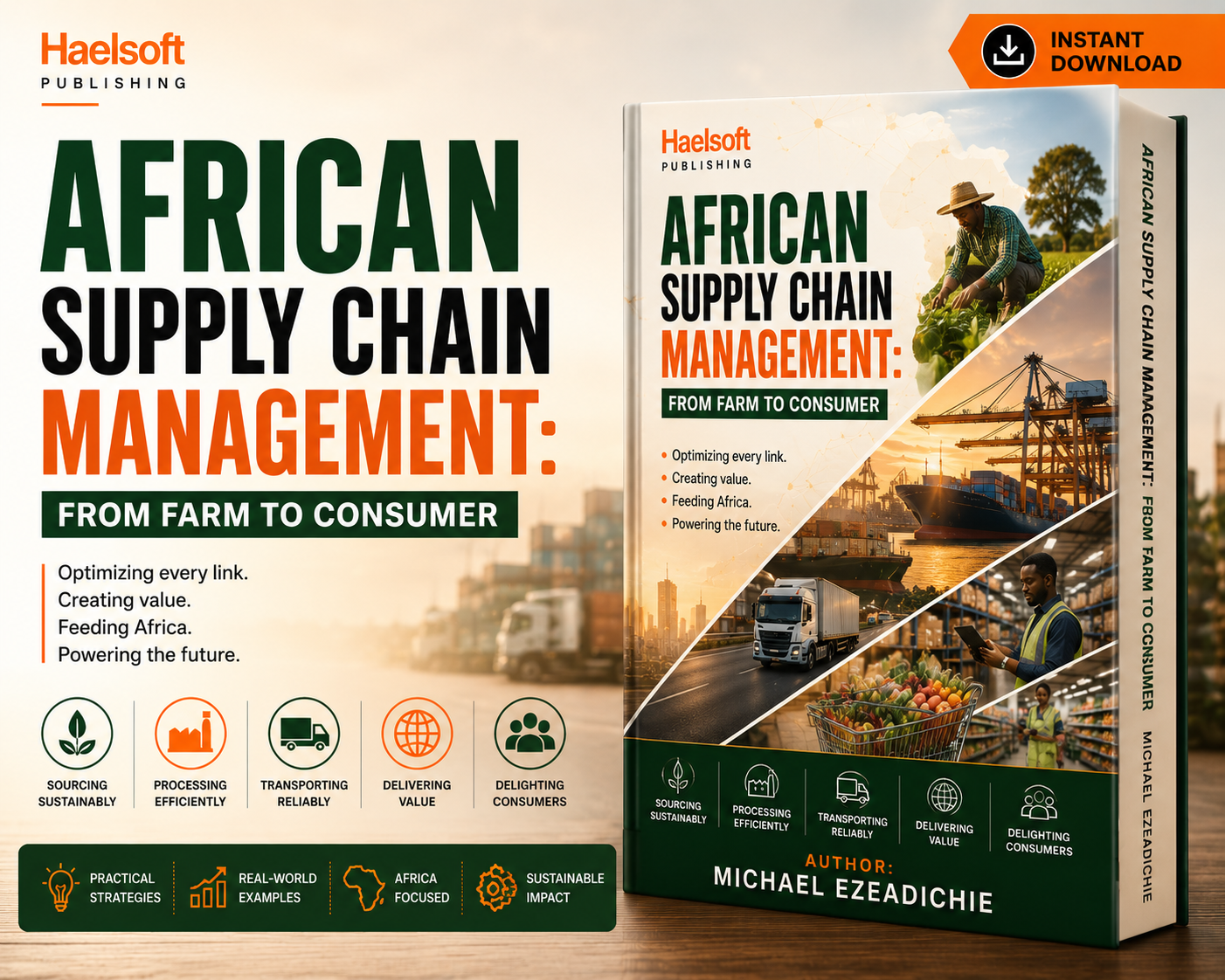
PDFAfrican Supply Chain Management: From Farm to Consumer.
In 2020, COVID-19 exposed what supply chain professionals had known for decades: African supply chains are fragile, import-dependent, and extraordinarily vulnerable to external shocks. When global shipping disrupted, Nigerian factories ran out of raw materials. When pharmaceutical supply chains broke, African hospitals ran out of medicines. When food import logistics collapsed, urban African consumers faced shortages of basic staples. The pandemic was a mirror that showed Africa its supply chain reality. But the same period also showed something else: the extraordinary resilience and creativity of African supply chain actors. Local manufacturers who pivoted to produce hand sanitiser and face masks when imports stopped. Informal traders who reorganised distribution networks to serve locked-down urban households. Farmers who found new direct-to-consumer channels when traditional wholesale markets closed. The pandemic was not just a crisis — it was a demonstration of African supply chain capability that conventional analysis consistently underestimates. African supply chain management sits at the intersection of the continent's greatest development challenges and its greatest commercial opportunities. The supply chains that move food from African farms to African consumers — with 30-40% wasted in between — represent both a staggering inefficiency and a massive improvement opportunity. The pharmaceutical supply chains that fail to deliver medicines to rural clinics represent a healthcare crisis and a logistics business gap simultaneously. This book is for every African supply chain professional, business operator, and entrepreneur who wants to build supply chains that are more efficient, more resilient, and more impactful. It covers the full supply chain spectrum from agricultural supply chains through procurement, warehousing, and logistics, to the digital technologies transforming every link in the chain. African supply chains are being rebuilt. This book shows you how to build them well. Table of Contents Chapter One: African Supply Chain Landscape — Challenges, Structure, and Opportunity Chapter Two: Agricultural Supply Chains — From Farm Gate to Market Chapter Three: Procurement and Sourcing Strategy Chapter Four: Inventory Management in African Contexts Chapter Five: Warehousing and Distribution Centre Operations Chapter Six: Last-Mile Distribution in African Markets Chapter Seven: Cold Chain and Perishable Supply Chains Chapter Eight: Digital Supply Chain Management Chapter Nine: Cross-Border and Regional Supply Chains Chapter Ten: Building Resilient African Supply Chains
 PDF
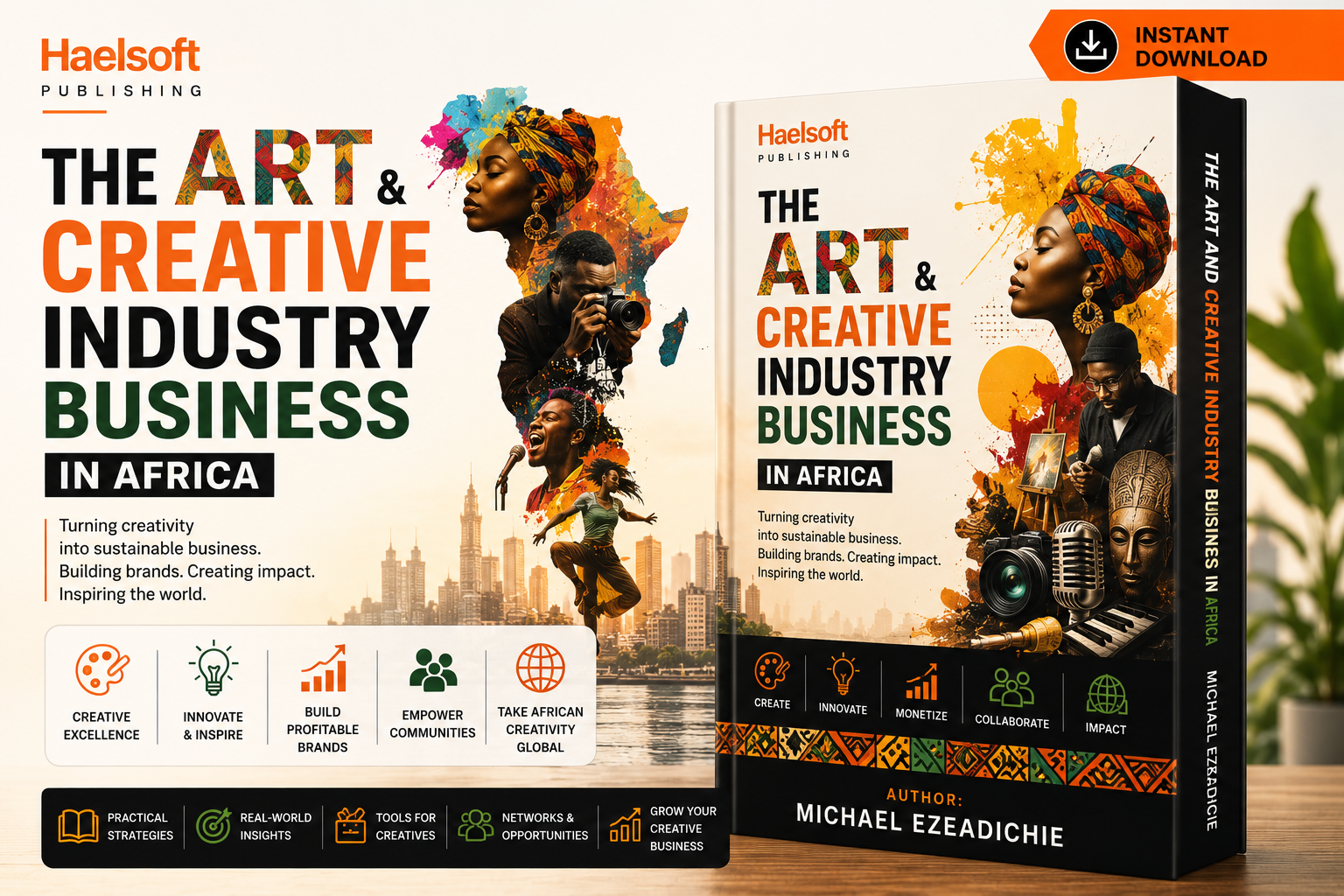
PDFThe Art and Creative Industry Business in Africa
Africa is one of the world's most creatively rich continents — a fact that no serious student of human culture disputes. The visual traditions of West African masquerade art, the sonic genius of East African taarab music, the architectural innovation of Swahili coastal cities, the textile mastery of Kente weaving, the narrative traditions of Griot storytelling, the sculptural excellence of Benin bronzes, the contemporary dynamism of Lagos streetwear culture, the cinematic ambition of Nollywood — Africa's creative heritage spans thousands of years of innovation and encompasses a diversity of expression that no single cultural tradition anywhere in the world can match. Yet the creative economy — the commercial sector built around creative expression, cultural production, and artistic practice — remains dramatically underdeveloped in Africa relative to this extraordinary creative endowment. African musicians, visual artists, filmmakers, designers, and craftspeople generate significant global cultural value while capturing only a small fraction of the commercial value that their creativity produces. The business infrastructure that converts creative talent into sustainable creative livelihoods has been systematically absent. This is changing. The global success of Afrobeats music has demonstrated that African cultural production can achieve both global commercial scale and genuine global cultural influence. The international art market's growing interest in contemporary African art has created new commercial opportunities for African visual artists and their galleries. Nollywood's streaming platform deals demonstrate that African film can generate international commercial returns. African design's growing recognition in global fashion has created new markets for African textile and craft traditions. This book is the complete guide to building businesses in Africa's creative economy — for the visual artist building a gallery business, the musician managing a music career, the filmmaker developing a production company, the craft entrepreneur scaling artisan production, the designer building a brand, and the cultural entrepreneur creating platforms that support and commercialise African creative expression. It covers both the creative and commercial dimensions of creative industry business — because the most successful creative businesses are built by people who understand and honour both. Africa's creativity is its most renewable resource. This book shows you how to build businesses that make it commercially sustainable. Table of Contents Chapter One: Africa's Creative Economy — Scale, Opportunity, and Value Chains Chapter Two: Visual Arts — Galleries, Collectors, and the African Art Market Chapter Three: Music Industry in Africa — From Artist to Business Chapter Four: Film, Television, and Screen Content Production Chapter Five: Design Business — Graphic, Product, and Interior Design Chapter Six: Photography and Visual Media Business Chapter Seven: Crafts, Artisan Production, and Cultural Heritage Business Chapter Eight: Creative Education and Skills Training Business Chapter Nine: Intellectual Property and Rights Management for Creatives Chapter Ten: Building a Creative Economy Ecosystem in Africa
 PDF
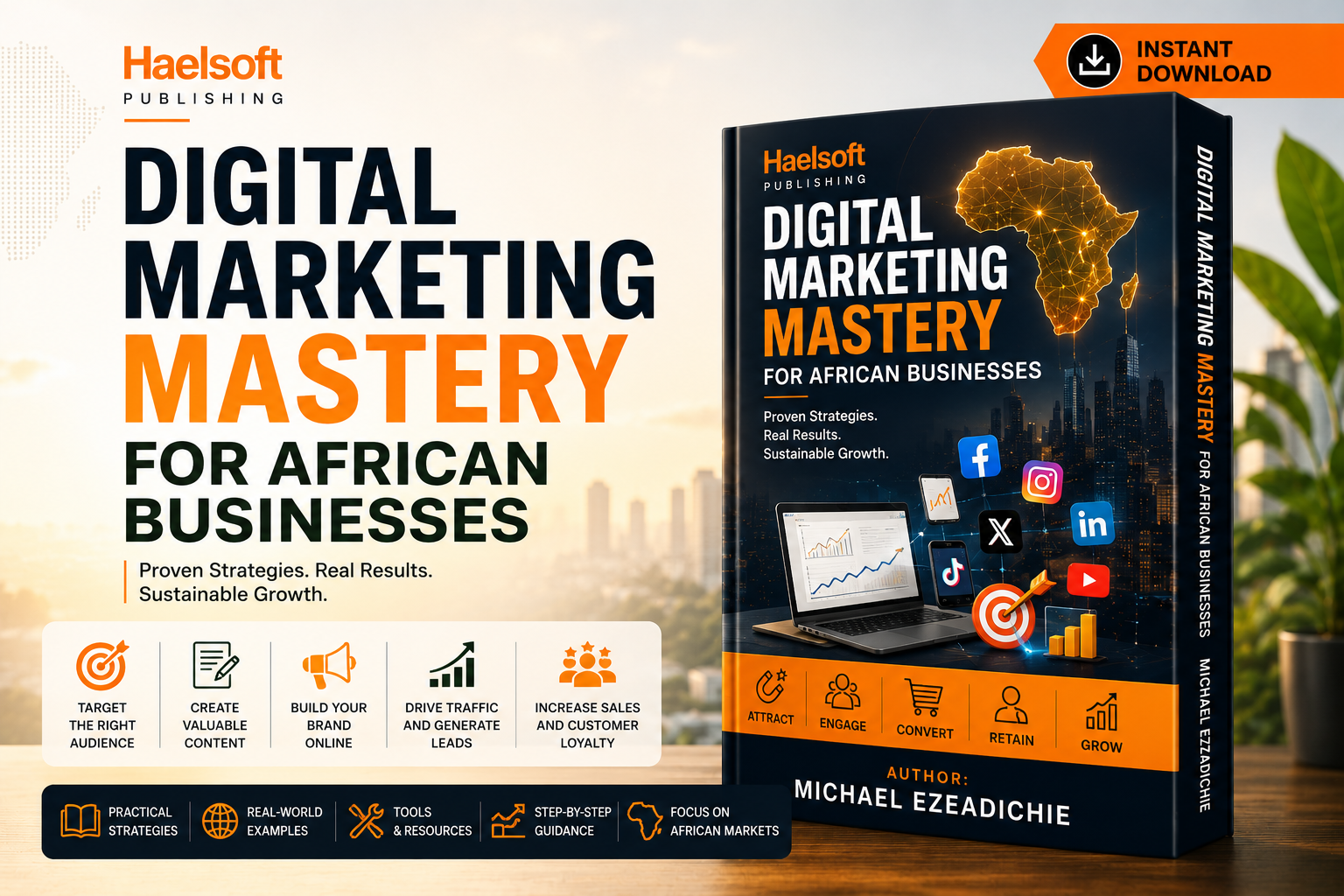
PDFDigital Marketing Mastery for African Businesses
A decade ago, a startup in Lagos competed for customers against established companies with large advertising budgets, prime billboard locations, and decades of brand recognition. The startup could not afford television. Billboards were priced for corporations. The playing field was tilted steeply toward the incumbents. Today, that same Lagos startup can reach one million targeted Nigerian consumers on Instagram for less than N50,000. They can rank number one in Google for 'best accounting software Nigeria' through content marketing investment of time rather than money. They can build a WhatsApp community of 5,000 loyal customers who receive their updates directly, for free. They can run Facebook ads targeting specifically women aged 25-40 in Lagos Island who earn above a certain income level and have expressed interest in their category — precision that no billboard or television campaign can match. Digital marketing has done for African small business what the mobile phone did for African banking — it has democratised access. It has given the one-person startup the same marketing channels as the multinational corporation. The quality of thinking, the consistency of execution, and the depth of audience understanding now matter far more than the size of the marketing budget. But this equalisation comes with a challenge: the same tools available to every African business are available to every competitor. Everyone can post on Instagram. Everyone can run Facebook ads. Everyone can create a website. The businesses that win in digital marketing are those who use these tools with greater skill, greater consistency, greater creativity, and greater strategic intelligence than their competitors. This book is the complete guide to winning at digital marketing in Africa — covering every major digital marketing discipline with the specific insights, tactics, and frameworks that work in African market contexts. Whether you are a complete beginner building your first digital presence or an experienced marketer seeking to elevate your performance, this book provides the strategic framework and tactical playbook you need. The digital audience is waiting. This book shows you how to reach it. Chapter One: Digital Marketing Strategy for African Businesses Chapter Two: Website and SEO — Being Found on Google Chapter Three: Social Media Marketing — Building Audience and Engagement Chapter Four: Content Marketing — Creating Value That Attracts Customers Chapter Five: Email and WhatsApp Marketing — Direct Audience Relationships Chapter Six: Paid Digital Advertising — Facebook, Google, and Beyond Chapter Seven: Influencer and Community Marketing in Africa Chapter Eight: E-Commerce Digital Marketing Chapter Nine: Analytics, Measurement, and Marketing Optimisation Chapter Ten: Building a Digital Marketing Team and Agency
 PDF
PDFBuilding Generational Wealth in Africa: A Family Legacy Guide
There is a painful pattern that repeats itself across African families: a first-generation entrepreneur builds a successful business through extraordinary dedication, sacrifice, and commercial skill. The business grows from nothing to something significant — employing dozens or hundreds of people, providing a good life for the family, and standing as a monument to what African entrepreneurship can achieve. Then the founder dies. Within a decade — sometimes within a year — the business is in difficulty. The family disputes the ownership. The children who were raised in comfort have not developed the work ethic or the commercial skills to sustain what was built. The assets that were accumulated are dispersed through legal battles, poor investment decisions, lifestyle inflation, and the extended family financial demands that the founder's authority had managed but that nobody else can contain. The wealth that took a lifetime to build is gone in a generation. This pattern is so common in Africa that it has become an accepted wisdom — 'the first generation builds, the second generation spends, the third generation is poor.' But it is not inevitable. The families that break this pattern — the Motsepes in South Africa, the Dangotes in Nigeria, the Birhanessus in Ethiopia, the Otieños in Kenya — have built multi-generational wealth by design, not by accident. They have documented their wealth-building philosophy, structured their business ownership to survive transition, educated their children about wealth and responsibility, established family governance that manages competing interests, and built the institutional structures that protect wealth across time. This final book in the African & Emerging Markets series is the most personally important of them all — because it addresses the question that underlies every other book in the series: what is all this business-building for? The answer is legacy. The answer is building something that outlasts your individual lifetime and creates genuine opportunity for those who come after you. This book shows you how to build it. Table of Contents Chapter One: The African Generational Wealth Mindset Chapter Two: Building the Wealth Foundation — Income, Savings, and Investment Chapter Three: Real Estate as Generational Wealth in Africa Chapter Four: Business Ownership — The Primary African Wealth Vehicle Chapter Five: Investment Portfolios — Stocks, Bonds, and Beyond Chapter Six: Protecting Wealth — Insurance, Legal Structures, and Asset Protection Chapter Seven: Estate Planning and Succession in African Contexts Chapter Eight: Family Governance — Managing Wealth Across Generations Chapter Nine: Raising Financially Intelligent Children Chapter Ten: Legacy, Philanthropy, and the African Wealth Vision
 PDF
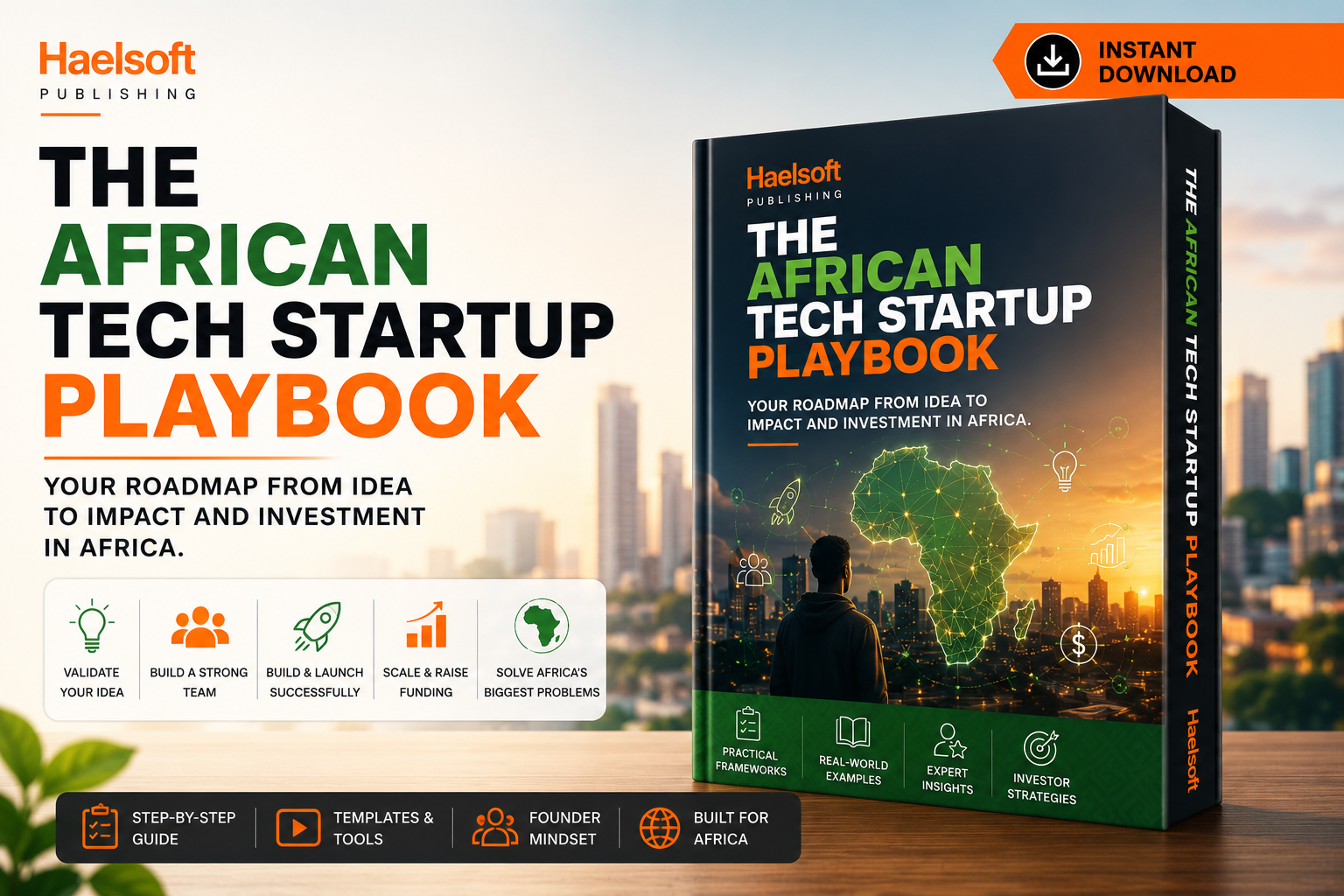
PDFThe African Tech Startup Playbook
In 2012, African tech startups raised approximately $400 million in venture funding. In 2021, they raised $5 billion. In 2022, despite a global venture capital slowdown, African startups raised $6.5 billion — the highest annual total in African tech history. In that same year, a Nigerian fintech company (Flutterwave) and an Egyptian fintech company (Fawry) each achieved unicorn valuations exceeding $1 billion. Cairo, Lagos, Nairobi, and Cape Town emerged as globally recognised startup ecosystems competing for talent, capital, and the next generation of African technology entrepreneurs. This is Africa's tech startup decade — and the playbook is being written in real time. The African tech startup ecosystem has produced some of the world's most innovative companies: M-Pesa (Kenya), which invented mobile money and gave banking to hundreds of millions of people who had never had bank accounts. Flutterwave (Nigeria), which built the payment infrastructure that connects African businesses to global commerce. Andela (Nigeria/pan-Africa), which identified and developed African software engineers for international technology companies. Kobo360 (Nigeria), which digitised freight logistics. Yoco (South Africa), which gave small businesses their first card payment terminals. Paystack (Nigeria), which was acquired by Stripe for $200 million — the largest acquisition of an African tech company at the time. And this is just the beginning. Africa's structural conditions for tech startup success have never been better: a rapidly growing mobile internet user base, a young population comfortable with digital products, a massive underserved market across every sector, growing availability of risk capital, and a generation of world-class African technology talent who have the skills, the ambition, and increasingly the capital to build at scale. This book is the playbook for African tech entrepreneurs — covering the complete startup journey from idea validation through product development, fundraising, team building, growth, scaling, and eventually exit or maturity. It draws on the documented experience of Africa's most successful tech startups, the frameworks that the global startup ecosystem has developed, and the specific adaptations that African market contexts require. Africa's next unicorn is being built right now. This book shows you how to build it. Table of Contents Chapter One: The African Tech Startup Ecosystem Chapter Two: Idea Validation and Problem-Solution Fit Chapter Three: Building Your MVP — Product Development for African Markets Chapter Four: Business Models and Unit Economics for African Tech Chapter Five: Fundraising — From Pre-Seed to Series A and Beyond Chapter Six: Building a World-Class African Tech Team Chapter Seven: Go-to-Market Strategy for African Tech Startups Chapter Eight: Growth, Metrics, and the Path to Scale Chapter Nine: Navigating African Tech Regulation Chapter Ten: From Startup to Scale — African Tech Success Stories
 PDF
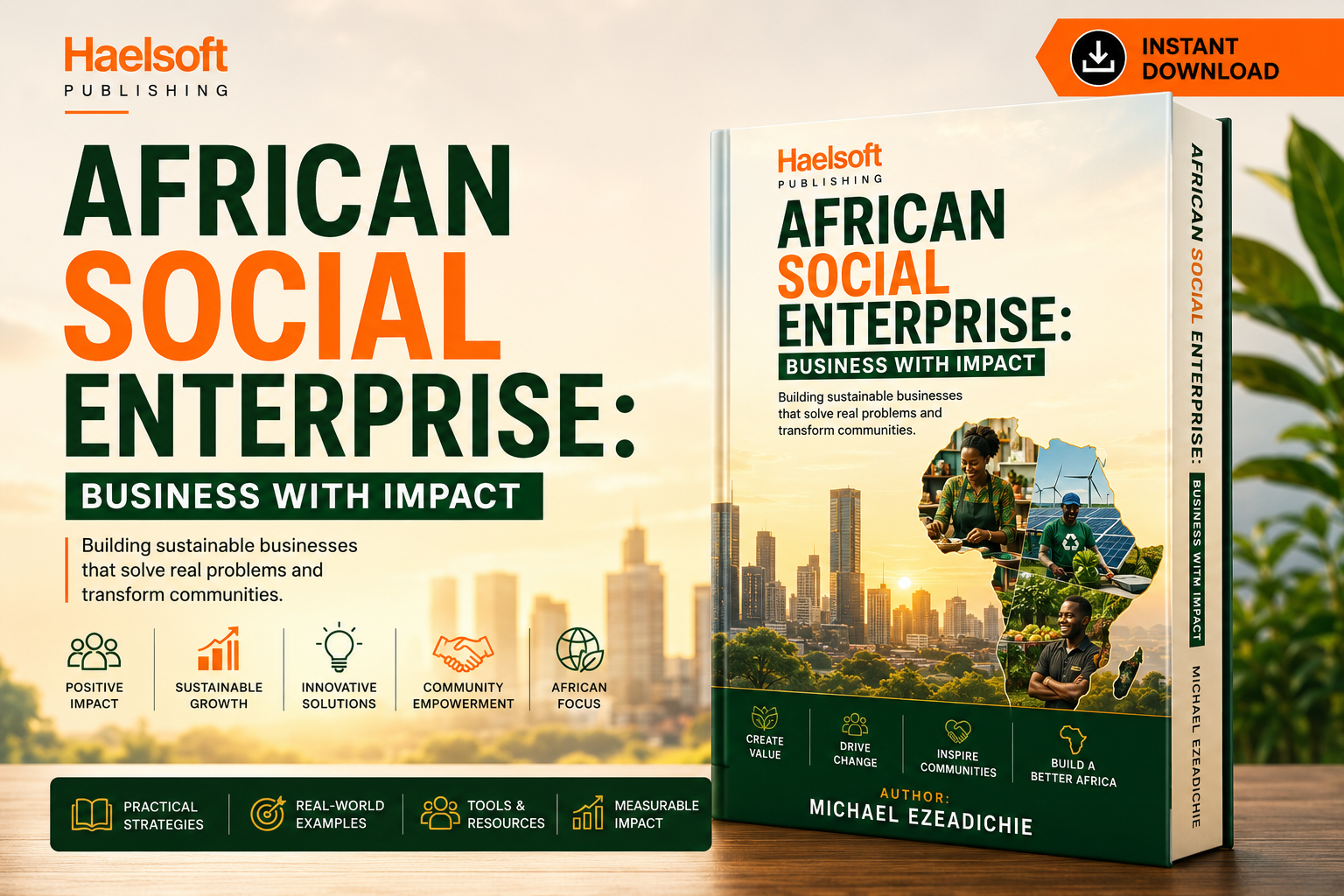
PDFAfrican Social Enterprise: Business with Impact
The idea that business and social good are in fundamental tension — that the pursuit of profit necessarily comes at the expense of people and planet — is both intellectually wrong and practically damaging. It is wrong because the most durable businesses are those that genuinely serve their customers, their communities, and their context. It is damaging because it has historically divided the entrepreneurs who care about impact from the investors who care about returns — leaving impact-focused ventures chronically underfunded and commercially fragile. Africa has always had a different relationship with this question. The African business tradition — the market woman who extends credit to a struggling customer, the transport cooperative that serves a community no commercial operator would find profitable, the informal savings group that pools community resources for collective benefit — has always blended commercial activity with community obligation in ways that Western business theory struggled to categorise. What is new is the formalisation of this tradition into the concept of the social enterprise — a business that explicitly pursues both commercial sustainability and social impact as simultaneous, non-negotiable objectives. And what is extraordinary about Africa's social enterprise moment is the scale of the opportunity: a continent with the world's greatest unmet social needs (healthcare, education, clean energy, financial inclusion, food security) and the world's most entrepreneurially creative population building market-based solutions to those needs. M-KOPA gives 4 million households electricity they could not afford. Twiga Foods reduces post harvest loss for thousands of farmers while feeding millions of urban consumers. mPharma improves medicine availability for patients who previously could not access essential drugs. Sanergy builds profitable businesses from urban sanitation. These are not charities. They are commercial enterprises with genuine social impact — demonstrating that the most ambitious social challenges in Africa are also the most significant commercial opportunities. This book is the complete guide to building social enterprises and impact businesses in Africa — for the social entrepreneur who wants commercial sustainability alongside social impact, the investor who wants both financial and social returns, and the business professional who wants to understand how the most purposeful businesses on the continent are designed and built. Africa needs more businesses with impact. This book shows you how to build them. Table of Contents Chapter One: Social Enterprise and Impact Business — Definitions and Models Chapter Two: Identifying and Validating Social Enterprise Opportunities in Africa Chapter Three: Business Models for African Social Enterprises Chapter Four: Impact Measurement and Social Return on Investment Chapter Five: Funding and Financing African Social Enterprises Chapter Six: Building a High-Performing Social Enterprise Team Chapter Seven: Scaling African Social Enterprises Chapter Eight: Governance and Legal Structures for Social Enterprises Chapter Nine: African Social Enterprise Case Studies Chapter Ten: The Future of African Impact Business
 PDF
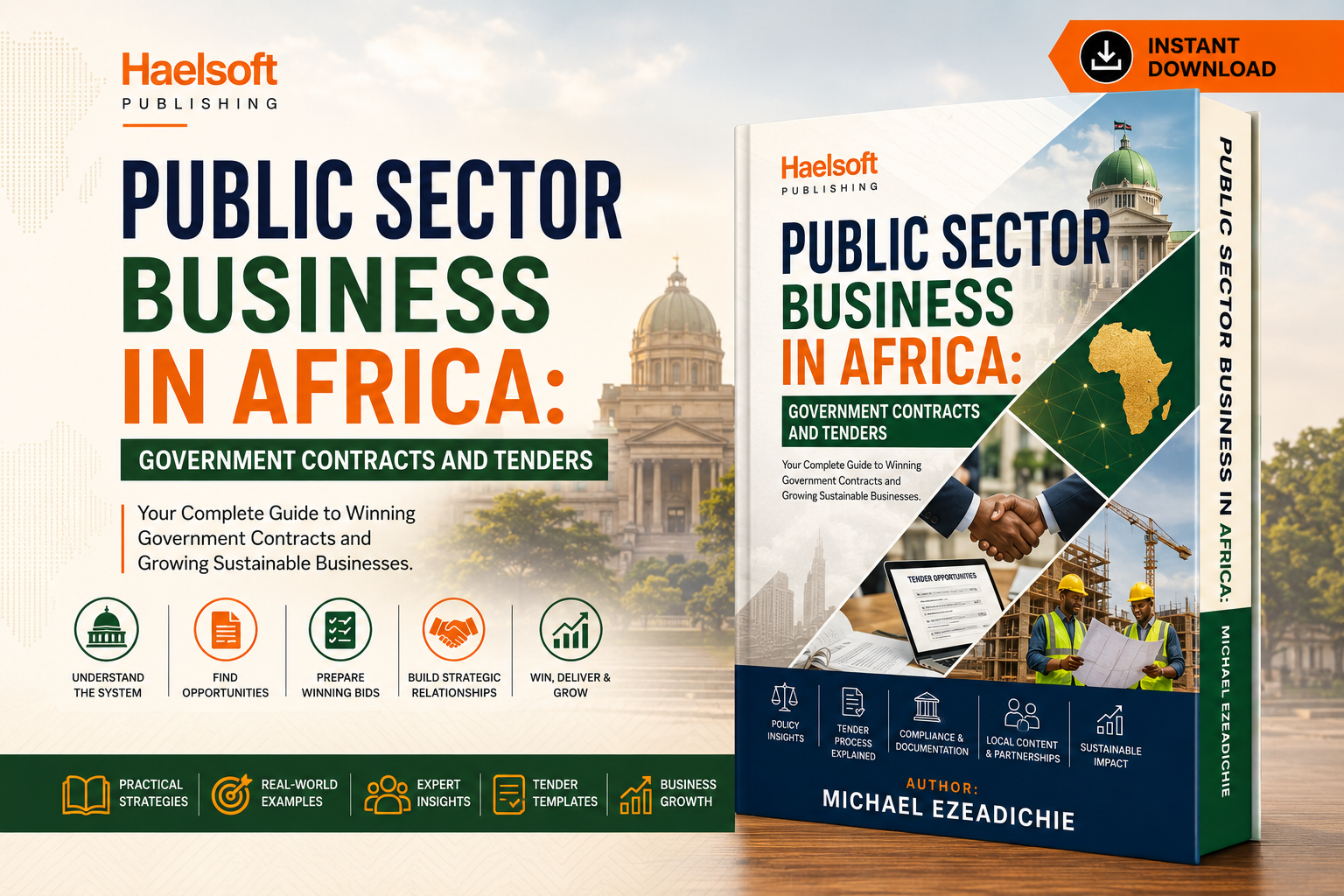
PDFPublic Sector Business in Africa: Government Contracts and Tenders
African governments collectively spend approximately $500-600 billion annually on goods, services, and infrastructure — making the public sector by far the largest single buyer on the continent. Healthcare equipment, pharmaceuticals, construction and infrastructure, technology systems, consulting services, security, catering, stationery, fuel, vehicles, education materials — every category of goods and services that businesses produce is also purchased by governments, and at volumes that dwarf any private sector client. For the African entrepreneur who understands the public procurement system — who knows how tenders are advertised, what evaluation criteria matter, how to write proposals that score well, how to maintain relationships with public sector decision-makers, and how to deliver on government contracts reliably — the government market represents one of the most commercially significant and most consistently available revenue opportunities in African business. But the public sector business environment in Africa also presents unique challenges that private sector business experience alone does not prepare entrepreneurs for. Payment delays that stretch from 30 days to 18 months. Bureaucratic requirements that demand documentation most businesses are not prepared to provide. Political dynamics that influence procurement decisions in ways that are not always transparent. And the ethical minefield of a procurement environment where corruption is documented in many jurisdictions and where the line between legitimate relationship-building and bribery is sometimes deliberately obscured. This book addresses all of these dimensions — the commercial opportunity, the process intelligence, the proposal craft, the relationship management, the financial management for government contracts, and the ethical framework for operating in public procurement environments with integrity. It is written for the entrepreneur who wants to access the government market honestly and professionally, and who wants to build a sustainable government business that does not depend on corruption for its commercial survival. The government market is enormous. This book shows you how to access it properly. Chapter One: Understanding African Public Procurement Chapter Two: Registering as a Government Supplier Chapter Three: Finding and Tracking Tender Opportunities Chapter Four: Writing Winning Tender Proposals Chapter Five: Pricing and Financial Planning for Government Contracts Chapter Six: Managing Government Contract Delivery Chapter Seven: Government Relationships and Business Development Chapter Eight: Financing Government Contracts Chapter Nine: Ethics, Anti-Corruption, and Compliance Chapter Ten: Building a Sustainable Government Business
 PDF
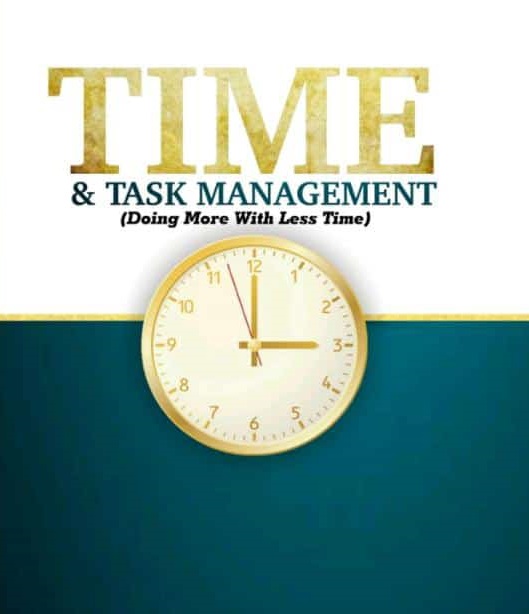
PDFTime and Task Management
The book is written in simple and clear language and all the principles contained therein are applicable, practicable, tested and trusted to the glory of God the Father. This is a book that you should read at the beginning of every month or periodically to keep you in balance.
 PDF
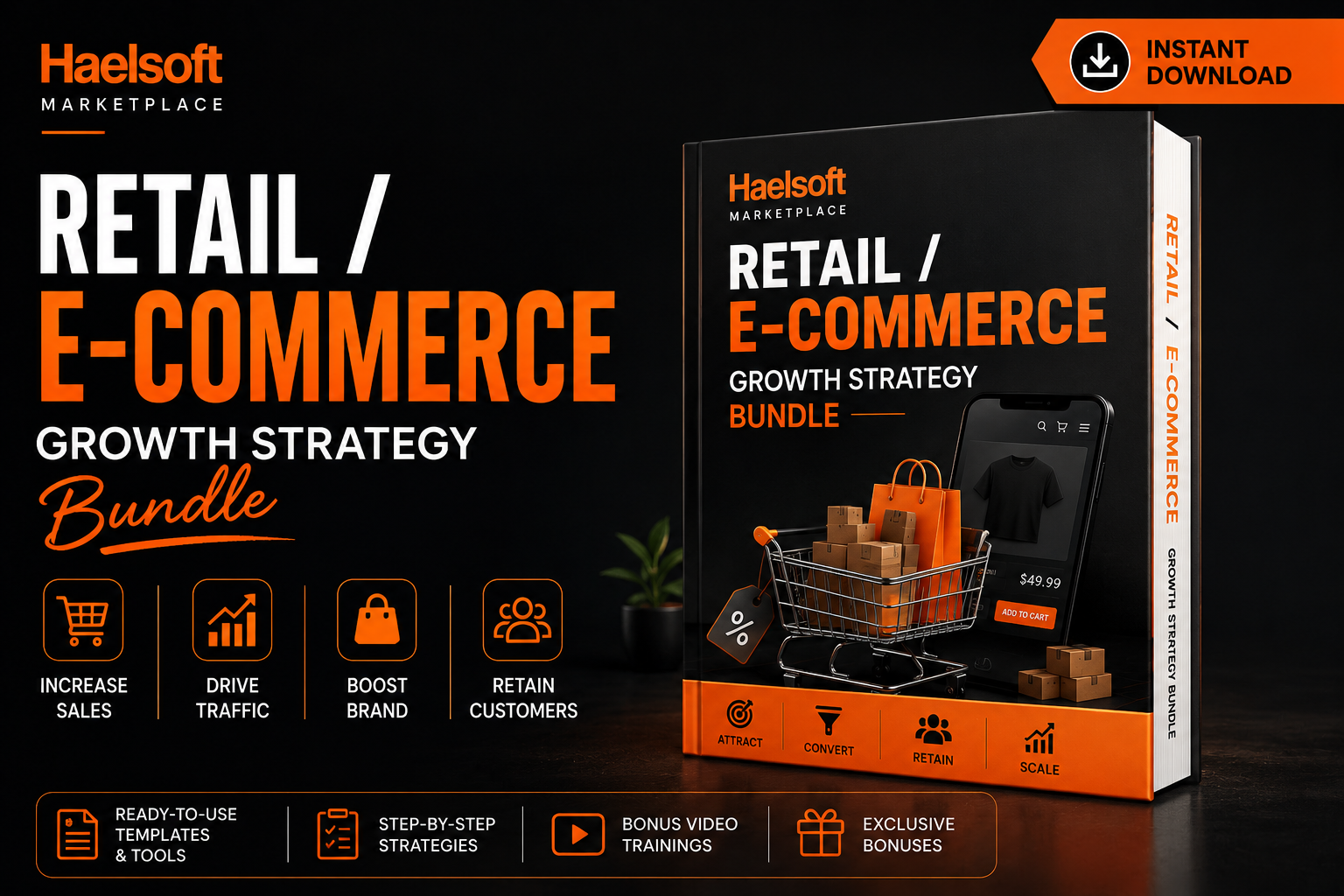
PDFE-Commerce & Retail Complete Strategy Pack
This Marketing & Growth Strategy document provides a comprehensive, actionable roadmap for e-commerce and retail businesses looking to scale revenue, acquire new customers, and build long-term brand loyalty. It covers the full marketing funnel — from awareness to retention — with specific tactics, KPIs, and timelines. Key Strategy Outcomes • Increase website traffic by 40–120% within 6 months • Improve customer acquisition cost (CAC) efficiency by 25–35% • Grow email subscriber list and repeat purchase rate • Build a recognizable brand presence across digital channels • Achieve measurable ROI on marketing spend within 90 days
 PDF
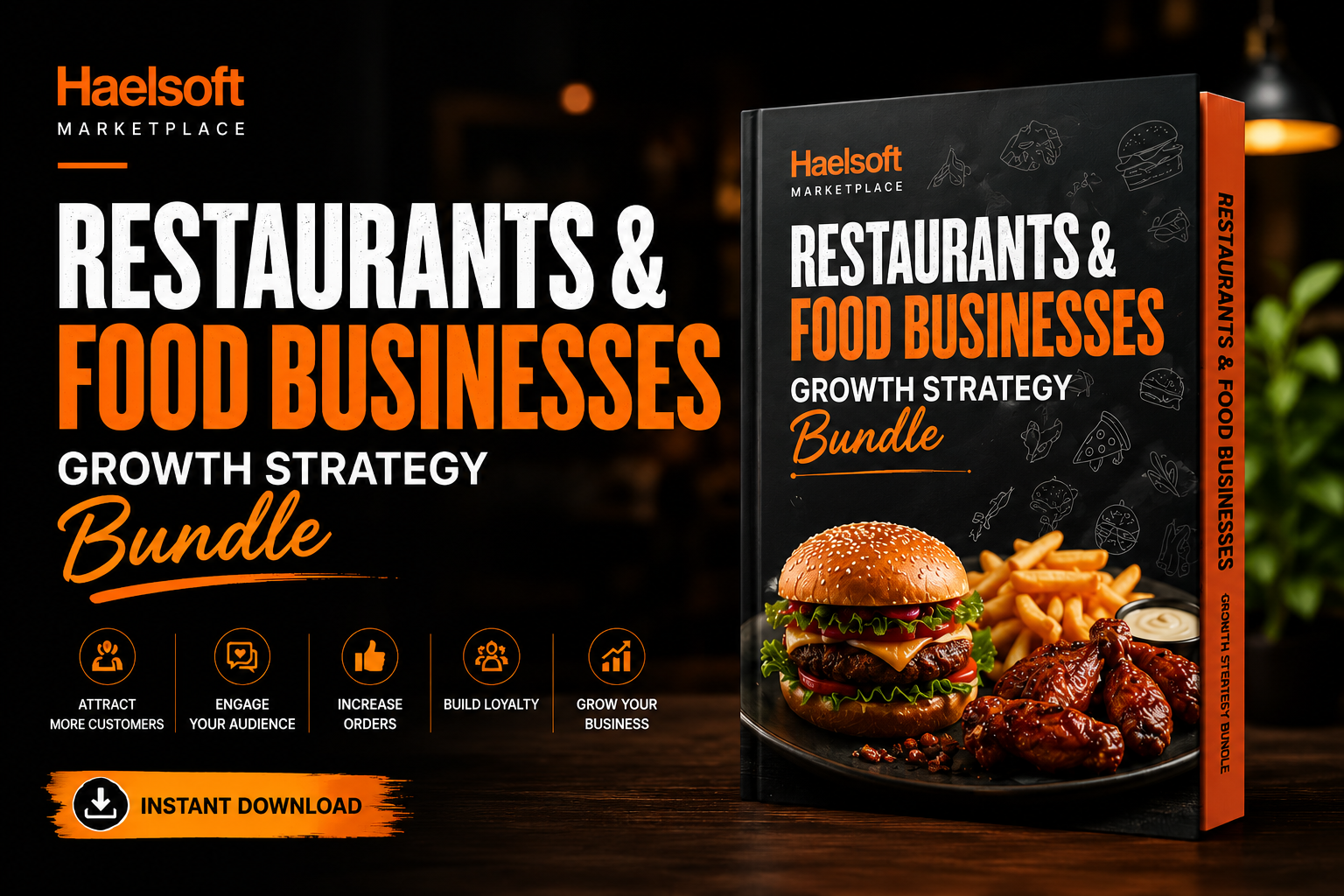
PDFRestaurant & Food Business Complete Strategy Pack
The restaurant and food industry is one of the most competitive and emotionally driven markets in the world. Success is not just about great food — it is about consistently getting the right customers through your doors (and onto your delivery apps), converting them into regulars, and building a brand they actively recommend to others. This Marketing & Growth Strategy provides a complete, practical playbook for restaurant owners, food business founders, and hospitality managers to drive footfall, grow online orders, and build lasting customer loyalty. This document covers customer segmentation, brand positioning, digital marketing channels, social media strategy, delivery platform optimization, review and reputation management, loyalty programs, event and seasonal marketing, and a 90-day growth roadmap tailored for the food and hospitality industry. Key Growth Outcomes • Increase dine-in covers by 25–40% within 6 months through targeted local marketing • Grow online delivery orders by 35–60% by optimising delivery platform presence • Build a loyal customer base — drive repeat visit rate above 40% within 12 months • Generate consistent 5-star reviews and protect online reputation across all platforms • Build a social media presence that drives real reservations and orders, not just likes • Create a seasonal and event marketing calendar that eliminates slow-period revenue dips
 PDF
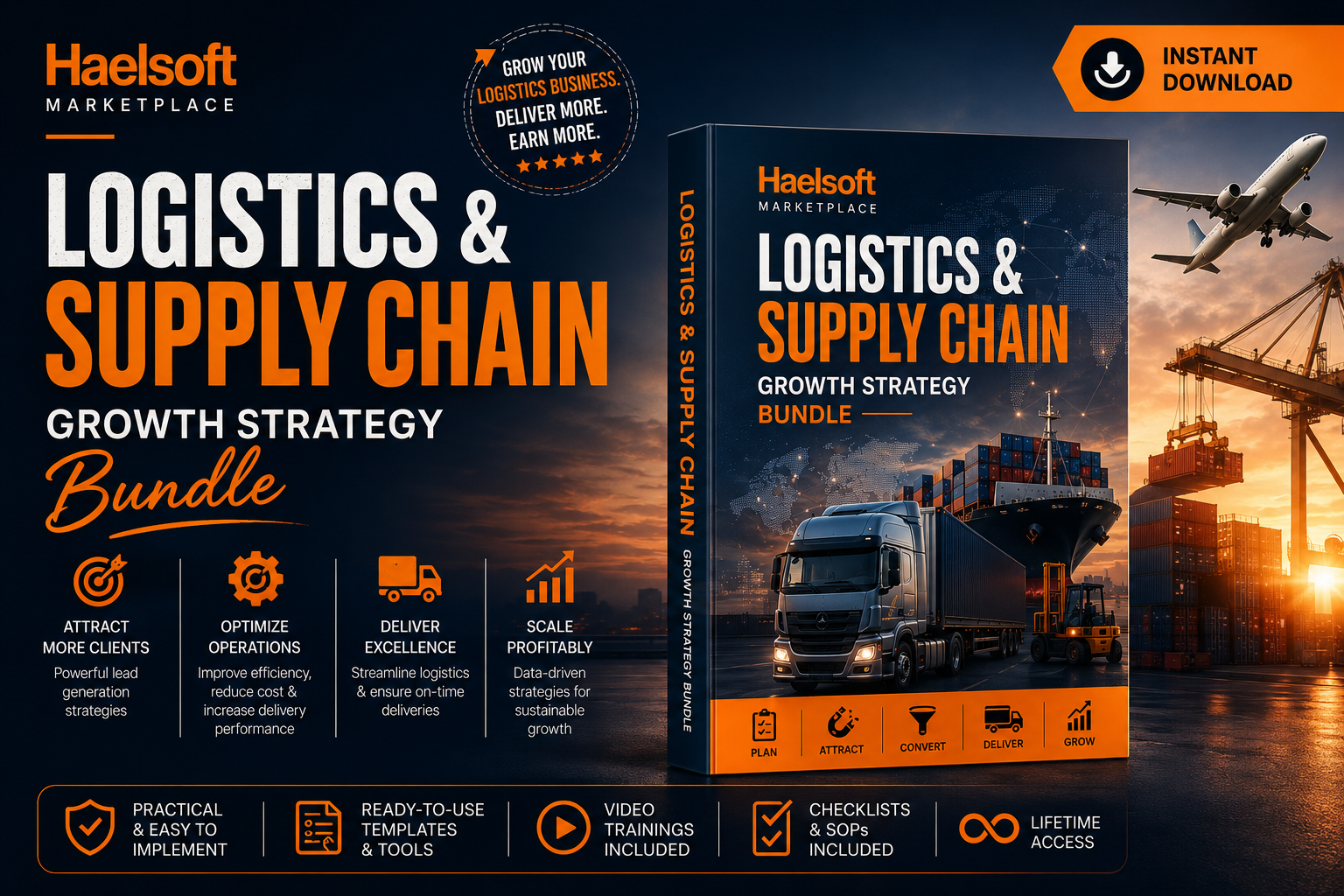
PDFLogistics & Supply Chain Complete Strategy Pack
The logistics and supply chain industry is one of the most competitive and relationship-driven sectors in the global economy. Winning and retaining clients in this space requires more than operational capability — it demands a credible brand, a structured go-to-market strategy, and a clear value proposition that cuts through a crowded marketplace of providers. This Marketing & Growth Strategy provides a comprehensive framework for logistics businesses to position themselves effectively, generate qualified leads, close contracts, and build the long-term client relationships that drive recurring revenue. This document covers market segmentation and ideal client profiling, brand positioning, digital and offline marketing channels, content and thought leadership strategy, tender and RFP response frameworks, referral and partnership marketing, pricing and proposal strategy, and a 90-day growth roadmap tailored specifically for the logistics and supply chain sector. Key Growth Outcomes • Build a differentiated brand positioning that commands premium pricing • Generate a consistent pipeline of qualified B2B leads from multiple channels • Improve tender and RFP win rates by 25–40% through structured proposal frameworks • Develop strategic partnerships that create referral-based revenue streams • Establish thought leadership in your logistics niche to attract inbound enquiries • Reduce customer acquisition cost by 30% through systematic referral programmes
 PDF
PDFHealthcare & Clinics Complete Strategy Pack
Healthcare marketing operates in a uniquely sensitive environment. Patients make decisions about their health, and the trust required before someone walks through your door is qualitatively different from any other industry. Effective healthcare marketing builds genuine trust, communicates clinical capability, demonstrates empathy, and makes it easy for the right patients to find and choose your practice. Done well, it fills your appointment book consistently and builds a patient community that refers others. This Marketing & Growth Strategy provides a complete framework for healthcare providers — hospitals, clinics, specialist practices, diagnostic centres, and wellness businesses — to attract more patients, build an authoritative brand, leverage digital channels ethically, generate referrals from other providers, and grow sustainably while maintaining the professional standards the sector demands. Key Growth Outcomes • Increase new patient appointments by 30–50% within 6 months through targeted local marketing • Build a strong digital presence that ranks in Google searches for your specialty and location • Establish a patient referral programme that generates 25%+ of new appointments • Create a referring physician network that consistently directs patients to your practice • Build a content and education platform that positions your clinicians as trusted authorities • Improve patient retention and appointment rebooking rates by 35%
 PDF
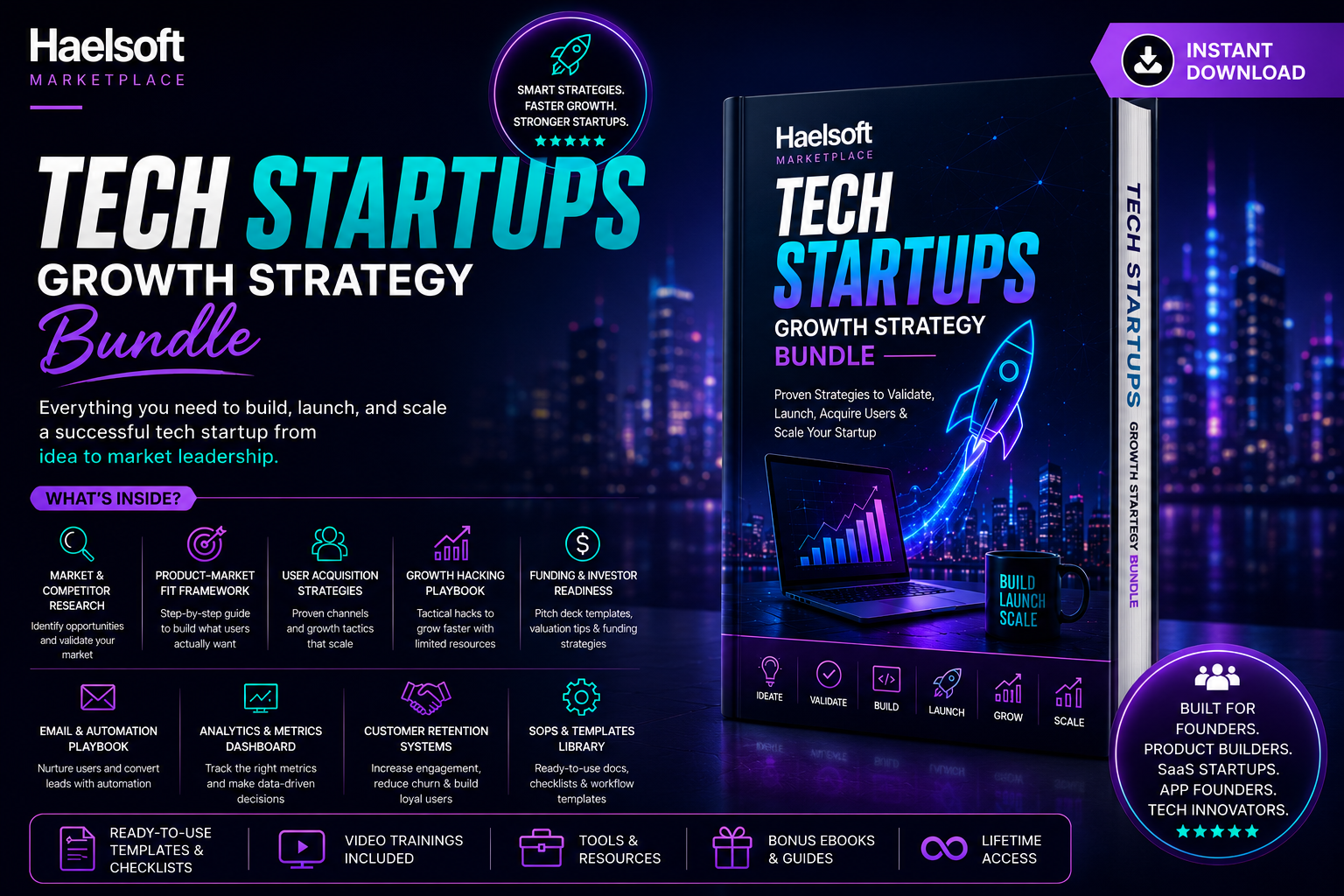
PDFTech Startup Complete Strategy Pack
Marketing a tech startup is fundamentally different from marketing an established business. You are simultaneously building a product, proving product-market fit, acquiring early adopters, establishing a brand, and generating revenue — often with a small team and limited budget. The strategies that work for mature companies — broad advertising, mass media, large marketing teams — are wrong for early-stage startups. What works is precision: finding the exact customers who have the problem your product solves, getting in front of them with the right message through the right channels, and turning early users into evangelists who grow the product for you. This Marketing & Growth Strategy provides a complete framework for tech startups from pre launch through to Series A scale — covering go-to-market strategy, product-led growth, content marketing, community building, paid acquisition, B2B sales motion, partner and channel marketing, viral and referral mechanics, and a structured 90-day growth roadmap tailored for the African tech market. Key Growth Outcomes • Acquire your first 1,000 active users within 90 days of launch using zero-budget and low budget tactics • Build a product-led growth engine that converts free users to paying customers systematically • Establish content and SEO as a compounding, zero-marginal-cost customer acquisition channel • Build a community of early adopters who refer, retain, and provide product feedback • Design and execute a B2B sales motion if selling to businesses • Create viral and referral mechanics that make your product grow itself • Build the marketing infrastructure needed to raise your first or next round of funding
 PDF
PDFReal Estate Agency Complete Strategy Pack
Real estate marketing is fundamentally different from most industries. Properties are not commodities — they are emotional, financial, and lifestyle decisions of enormous significance to buyers, sellers, landlords, and tenants. The agency or agent that wins in this environment is not the one with the biggest marketing budget; it is the one that builds the deepest trust, demonstrates the clearest expertise, and stays consistently visible to the right audience at the right moment. This Marketing & Growth Strategy provides a complete framework for real estate agencies to attract more listings, generate qualified buyer and tenant leads, build a powerful brand reputation, and grow market share systematically in a competitive property market. Key Growth Outcomes • Increase listing inventory by 30–50% within 6 months through a structured vendor acquisition strategy • Generate consistent qualified buyer and tenant leads from multiple digital and offline channels • Build a dominant brand presence in your target market that commands premium commission rates • Establish a referral network that delivers 35%+ of new instructions without paid advertising • Create a content and thought leadership platform that positions your agency as the market authority • Reduce average days-on-market for listings by 25% through superior property marketing
 PDF
PDFPsychology of Money
The Psychology of Money » by Morgan Housel explores how human behavior, emotions, and personal history—rather than technical intelligence or math skills—drive financial success. It provides timeless lessons on wealth, greed, and happiness, proving that managing your emotions is more vital than analyzing complex formulas